I. Overview of Jizhou Kiln
- Kiln Site: Located in present-day Ji’an, Jiangxi (anciently known as Jizhou), it was a famous southern folk kiln of the Song Dynasty, renowned particularly for its black-glazed ceramics, which reached their peak during the Southern Song period.
- Characteristics: Jizhou Kiln wares are simple and natural, skillfully employing raw materials and straightforward techniques to create endlessly varied decorative effects. This stands in contrast to the rigorous precision of northern kilns like Ding and Yaozhou.
II. The Technical Secret of Tortoiseshell Glaze
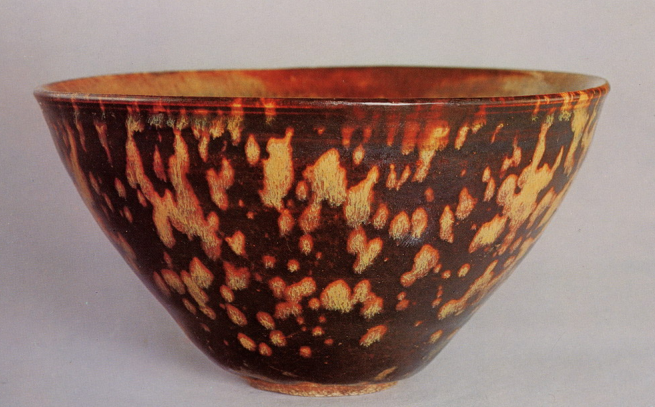
The tortoiseshell glaze is a signature decoration of Jizhou Kiln, imitating the mottled texture of hawksbill turtle shell. The key to its technique lies in:
- Glaze Application: First, a base glaze with high iron content (dark brown or black) is applied to the body. Then, a lighter, opalescent glaze (often plant-ash glaze) is randomly splashed or brushed on. The two glazes interflow and blend during high-temperature firing, forming natural, irregular patterns of intertwining light and dark shades.
- Firing Atmosphere: The kiln’s flame interacts subtly with the glazes, making each piece’s pattern unique—resembling tortoiseshell, clouds, or mist, abstract and dynamic.
III. The Aesthetic Essence of This Tea Bowl
- Song Simplicity and the Beauty of Spontaneity: The Song aesthetic valued “natural spontaneity.” The tortoiseshell pattern is not carved by hand but arises from the “fortuitous” interaction of glaze and fire, aligning with the Song philosophical ideal of “following the way of nature.”
- Union of Utility and Elegant Taste: The bowl typically has a flared or contracted mouth, suitable for whisking tea and observing the foam. The black glaze sets off the white froth, while the tortoiseshell pattern swirls like nebulae, adding a layer of serene interest to the tea ceremony.
- Folk Craftsmanship and Literati Sensibility: Although a folk kiln, Jizhou’s decorative artistry was influenced by the reclusive, scholarly aesthetic. The含蓄 (reserved) and mottled nature of the tortoiseshell glaze evokes misty landscapes or ink washes, inviting contemplation.
IV. Historical and Collectible Value
- Survival and Identification: Tortoiseshell-glazed Jizhou ware is relatively common among surviving pieces, but intact fine examples are still highly valued. Authentic pieces have a coarse, sandy buff-colored body, a lustrous glaze surface, and patterns that appear naturally infused within the glaze layer.
- International Influence: Such tea bowls were introduced to Japan alongside Zen Buddhism and tea culture, profoundly influencing Japanese appreciation of “karamono” (Chinese objects) and tea ceremony utensils. For instance, “taihi tenmoku” (tortoiseshell Tianmu ware) is highly prized.
- Market and Authentication: Well-preserved pieces with exceptional patterns command high prices at auction. Caution is needed against modern imitations (with stiff patterns and overly uniform body/glaze).
V. Related Techniques
Beyond tortoiseshell glaze, Jizhou Kiln is also famous for:
- Leaf-Splash Decoration: Using real leaves applied with glaze, firing them to leave clear vein impressions, creating an ethereal意境.
- Paper-Cut Appliqué: Applying paper-cut designs onto the glaze, blending folk art with ceramic technique.
- Partridge Feather and Tiger-Skin Spots: Glaze-variation styles similar to tortoiseshell, all exemplifying the beauty of “kiln transformation.”
VI. Cultural Imagery
In the daily life of the Song people, such a tea bowl was not merely a utilitarian object but a vessel merging natural philosophy and craft aesthetics. It seems to capture the chance and poetry of the universe within the palm of one’s hand, reflecting the deep fascination with subtle rhythms inherent in Song culture.