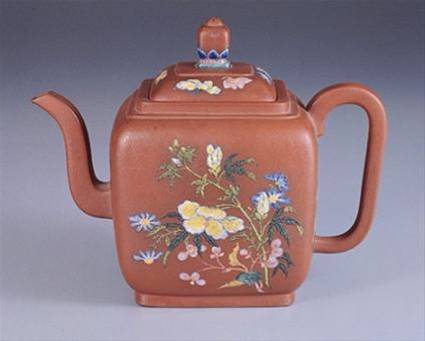
This teapot is an imperial masterpiece commissioned by the Kangxi Emperor and produced under the supervision of the Qing Palace Workshops. It features a body made from high-quality Zisha clay from Yixing, Jiangsu Province. Court painters from the Enamel Workshop then adorned this body with enamel pigments before firing it at a low temperature. It represents a perfect fusion of Chinese and European techniques and a meeting of imperial and folk artistry.
- Groundbreaking Technique: Zisha + Painted Enamel
- Zisha Body: Yixing Zisha is renowned for its unique double-porosity structure, subtle texture, and excellent workability, making it ideal for brewing tea. However, before the Kangxi period, Zisha ware was largely simple in form, decorated mainly with carving, appliqué, or natural kiln effects, reflecting a literati aesthetic.
- Painted Enamel: The enamel painting technique originated in Europe and was introduced to the imperial court via missionaries during the Kangxi period. These glass-based pigments are brilliant and glossy, traditionally used on copper or gold. Fascinated by this Western technology, the Kangxi Emperor ordered its experimentation on various mediums, including porcelain and Zisha.
- Technical Challenge: The Zisha body is more porous and absorbent compared to porcelain, making the application of enamel pigments prone to bleeding and absorption. Successfully firing such a refined piece demonstrates the exceptional skill and precise material control of the court artisans.
- Typical Kangxi Period Style
- Floral Motifs: The floral patterns painted on the body typically feature peonies, lotuses, chrysanthemums, or camellias—flowers symbolizing wealth and auspiciousness. The painting style is meticulous and neat, with fluent lines and vibrant yet elegant colors, embodying the spirit of traditional Chinese gongbi (meticulous brushwork) painting.
- Color Palette: The range of enamel colors in the Kangxi period was not as extensive as in later Yongzheng and Qianlong reigns, but the colors are rich, dense, and have a glass-like luster. Common colors include red, yellow, blue, green, purple, and white.
- Composition: The decorative layout is well-balanced, emphasizing symmetry and harmony. The scenes are lush and full of vitality.
- Imperial Provenance and Mark
- Such teapots were made exclusively for the Kangxi Emperor’s taste and were purely for imperial use, not commercial circulation.
- The base typically bears a four-character mark, “Kangxi Yuzhi” (Made by Imperial Command of Kangxi), written in enamel pigment in regular script (kaishu). This is one of the most important indicators of its authentic imperial origin. The mark is neatly executed, often within a single or double square border.
- Historical Context and Significance
- Imperial Taste and Patronage: The Kangxi Emperor was deeply curious about Western science and art. He regarded painted enamelware as a significant court art, and his personal promotion and supervision were the direct reasons for the creation of such artworks.
- Collaboration between Court and Region: The production typically followed an extended “official design and folk firing” model. The court provided designs, the plain body was likely crafted by master potters in Yixing, then transported to Beijing where court painters applied the enamel decoration before a second, low-temperature firing in small kilns within the workshops. This process combined the expertise of craftsmen from different regions.
- A Pivotal Role: The Kangxi Zisha painted enamels were an innovative experiment that laid the technical and aesthetic foundation for the peak perfection of porcelain painted enamels (enamel-decorated porcelain) in the subsequent Yongzheng and Qianlong eras. They initiated the trend of imperializing and embellishing Zisha ware.
- In summary, the Kangxi Yixing Zisha Teapot with Painted Enamel Floral Decoration is far more than just a teapot. It is an artistic masterpiece embodying imperial will, Sino-European craftsmanship, and the spirit of its time—an enduring monument in the history of Qing dynasty imperial arts and crafts.