


1.Design and Prototype Development:
Designers conceptualize the jewelry pieces and create prototypes using CAD software or traditional methods.
2.Material Selection:
Choose the base metal and any other alloys to create the desired properties like strength, color, and durability.
Molding or Casting:
Once the design is finalized, molds are created for mass production. The jewelry pieces can be cast using various methods like investment casting or centrifugal casting.
3.Surface Preparation:
The jewelry pieces undergo surface preparation, which involves cleaning, polishing, and degreasing to ensure proper adhesion of the plating material.
4.Plating Process:
Alloy plating typically involves electroplating, where an electric current is used to deposit a thin layer of the desired metal onto the surface of the base metal.
5.Steps in electroplating:
Cleaning: The jewelry pieces are thoroughly cleaned to remove any contaminants.
Activation: A chemical solution or electrocleaning process is used to activate the surface of the base metal, promoting adhesion of the plating material.
Plating: The jewelry pieces are immersed in a plating bath containing the desired metal ions. A current is passed through the bath, causing the metal ions to deposit onto the surface of the jewelry pieces.
Rinsing and Drying: After plating, the jewelry pieces are rinsed to remove any excess plating solution and then dried.
6.Finishing Touches:
Once plated, the jewelry pieces may undergo additional finishing processes such as polishing, buffing, or coating to enhance their appearance and durability.
7.Quality Control:
Inspect the plated jewelry pieces for any defects or inconsistencies in plating thickness, color, and finish.
8.Packaging and Distribution:
Finally, the finished jewelry pieces are packaged and prepared for distribution to retailers or customers.
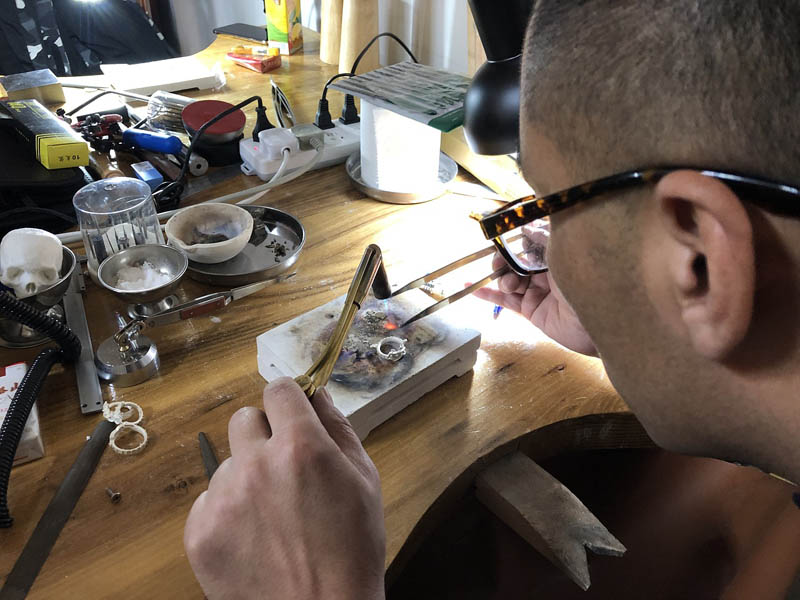
Production Process for Alloy Plating Jewelry
16
Mar
