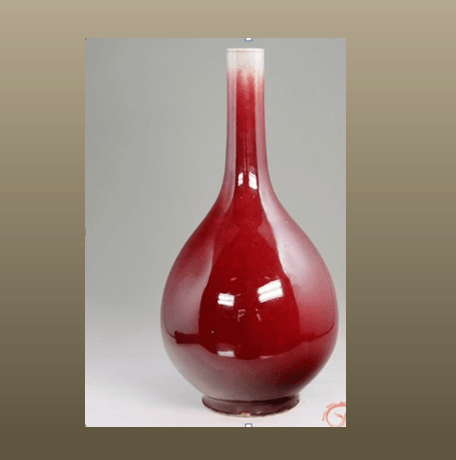
Characterized by its connected mouth and neck with an elongated neck that gradually widens from the shoulders down to a full, rounded belly, this vase derives its name from its resemblance to a suspended gallbladder. Primarily used for flower arrangements, the Gallbladder Vase first gained popularity during the Song Dynasty and continued to be mass-produced through the Ming and Qing Dynasties, predominantly in monochrome glazes.