


Height: 13 cmUnearthed in 1959 from the tomb of Zhang Sheng in Anyang County, Henan ProvinceCollection: Henan Museum
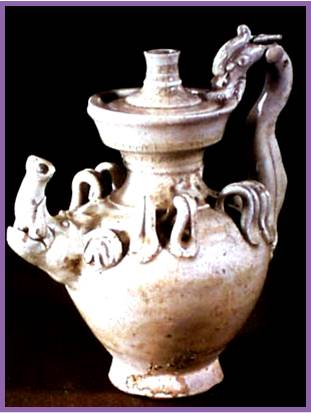
White-glazed Pot with Elephant-Head Spout and Dragon Handle (Sui Dynasty)
his is a exquisite and highly significant work of ancient Chinese ceramics. Let’s delve into an in-depth analysis and understanding of the artistic meaning of the White-glazed Pot with Elephant-Head Spout and Dragon Handle (Sui Dynasty).
This piece is far more than a utilitarian vessel; it is a concentrated embodiment of the technological prowess, cultural exchange, philosophical thought, and funerary beliefs of the Sui Dynasty. We can understand its artistic significance through the following layers:
1. Technologicality and Pioneering Significance: A Milestone in White Porcelain
- Core Value: First and foremost, its material is “white glaze.” In the history of Chinese ceramics, the Sui Dynasty was a critical period when white porcelain truly matured. Early ceramics were predominantly celadon, as iron impurities in the glaze naturally produced a greenish hue during firing. Producing white porcelain required drastically controlling the iron content in both the clay body and the glaze, demanding extremely high technical skill.
- Artistic Meaning: The pure white color of this pot represents the pinnacle of ceramic technology at its time. It symbolizes a breakthrough in human control over materials, moving from “utilizing nature” to “purifying nature.” This pure white paved the way for the flourishing development of Xing kiln white porcelain in the Tang Dynasty, Ding ware in the Song Dynasty, and even underglaze blue porcelain (Qinghua). Therefore, it is a ground-breaking “techno-artistic” work of milestone importance.
2. Form and Decoration: Symbol of Cultural Fusion
The form of the pot is highly distinctive, blending multiple cultural elements:
- Elephant-Head Spout:
- Real-world Origin: The Sui Dynasty unified China, and exchanges with South Asia and Central Asia became increasingly frequent. Elephants were precious animals tributed from southern regions (like Linyi, present-day central Vietnam) and the Western Regions, symbolizing auspiciousness, wealth, and powerful national strength.
- Religious Meaning: Buddhism was extremely prosperous during the Northern and Southern Dynasties and the Sui Dynasty. In Buddhism, the elephant is the mount of the Bodhisattva Samantabhadra, representing wisdom, strength, and dignity. Using an elephant head for the spout imbues the vessel with sacred and auspicious connotations.
- Dragon Handle:
- Chinese Tradition: The dragon is the oldest totem of the Chinese nation, the supreme symbol of imperial power, strength, and good fortune.
- Symbol of Power: The Sui Dynasty ended centuries of division. The dragon image also reflects the strength of centralized power and the unity and majesty of the empire.
- Fusion and Innovation: The clever combination of the “elephant” (originating from South Asian/Buddhist culture) with the indigenous Chinese “dragon” on a single object is excellent physical evidence of Sino-foreign cultural exchange and integration during the Sui Dynasty. It reflects the open and confident spirit of the age and the creative capacity to assimilate foreign elements and adapt them for local use.
3. Function and Context: Reflection of Beliefs about Life and Death
- Context of Excavation: This object was unearthed from the Tomb of Zhang Sheng. Zhang Sheng was a high-ranking official (according to his epitaph, he held titles like General Zhenglu and Grand Master of Imperial Entertainment) of the Sui Dynasty. This means it was not an everyday item but a high-quality mingqi (burial object).
- Artistic Meaning: In a funerary context, its meaning is further elevated:
- Status Symbol: The refined white porcelain and complex craftsmanship demonstrate the tomb occupant’s high status and wealth.
- Aspiration for Eternity: The combination of the two auspicious and mythical creatures, the dragon and the elephant, forms a powerful “auspicious symbol.” They guard the tomb occupant, embodying wishes for the safe passage of the soul to the afterlife and its ascension to the immortal realm, hoping for continued prosperity in the next world. The pot itself likely symbolized a container for holding fine wines or elixirs for the deceased to enjoy in the netherworld.
Summary:The White-glazed Pot with Elephant-Head Spout and Dragon Handle is an artistic masterpiece that integrates technological breakthrough, cultural fusion, and spiritual symbolism (embodying religious beliefs/aspirations).
- From a technological history perspective: It is a milestone work representing the maturation of white porcelain technology.
- From a cultural history perspective: It is physical testimony to the cultural exchange and integration between China and foreign regions during the Sui-Tang period, showcasing the powerful ability of Chinese culture to absorb and transform external influences.
- From a social history perspective: It reflects the aesthetic taste, luxurious lifestyle, and veneration of auspicious culture among the upper classes of the Sui Dynasty.
- From a spiritual perspective: As a mingqi, it profoundly embodies ancient beliefs about life and death and the soul, namely the beautiful imagination and arrangements for the world after death. It serves as a material medium connecting the living and the dead, the mortal world and the immortal realm.
In conclusion, this work is small in size yet vast in implication. It is not merely a pot; it is a microcosm of its era, condensing the technological limits, open spirit, and pursuit of eternity characteristic of the Sui Dynasty.
