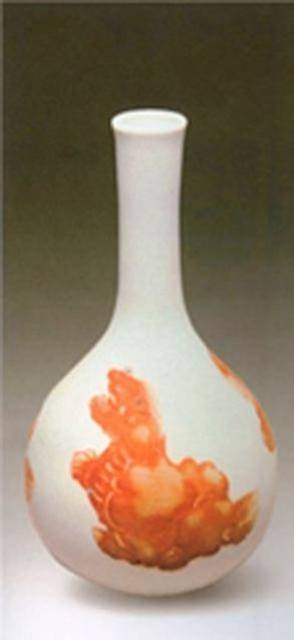
1. Core Concept Analysis
- Underglaze Red
- Technique: It falls under the category of underglaze decoration. Artisans use copper red pigment to paint designs on the porcelain body, which is then covered with a transparent glaze and finally fired in a single session at high temperature within a reducing atmosphere. Its primary characteristic is that the red patterns are sealed beneath the glaze layer, resulting in a deep, saturated color.
- Challenges and Value: The copper red pigment is extremely sensitive to the kiln’s temperature and atmosphere (oxygen content). If the temperature is slightly too high or too low, or the atmosphere deviates slightly, the red color can be lost (disappear) or turn grayish-black or dull red. The success rate is very low, hence the ancient saying, “a treasure from a thousand kilns.” Successfully fired underglaze red porcelain is particularly precious.
- Mythical Beast
- Meaning: These are not real animals but refer to bizarrely shaped, powerful mythical creatures from ancient mythology and legends. Classic sources include texts like the “Classic of Mountains and Seas” and “Huainanzi.”
- Common Types: Common mythical beasts in porcelain decoration include:
- Taotie: One of the nine sons of the dragon, often found on Shang and Zhou dynasty bronzes, symbolizing awe and mystery.
- Chi Dragon / Chi Tiger: Hornless dragons, commonly used for decoration, implying beauty and good fortune.
- Qilin: An auspicious beast, symbolizing blessings and peace.
- Luduan: A legendary divine creature capable of traveling 18,000 miles in one day and understanding all languages. It was said to only accompany wise rulers, symbolizing righteousness and benevolence.
- Kui Dragon / Kui Phoenix: One-legged dragons or phoenixes with archaic forms.
- Symbolism: These beasts are often endowed with auspicious meanings such as warding off evil, attracting good fortune, and demonstrating authority.
- Vase
- This refers to the shape, typically a decorative vessel for display. The forms are often elegant, such as “Yuhuchun Ping,” “Meiping,” or “Globular Vases,” which might be adorned with such patterns.
2. Artistic and Historical Context
- Origin: The underglaze red technique was first created at the Jingdezhen kilns during the Yuan Dynasty. Yuan underglaze red often had a grayish-black or dull red hue, but it pioneered the use of underglaze red painting.
- Heyday:
- Ming Dynasty, Yongle and Xuande Reigns: The underglaze red technique matured, producing bright, pure red colors, known as “precious red.” Mythical beast decorations from this period were often boldly painted and majestic.
- Qing Dynasty, Kangxi, Yongzheng, and Qianlong Reigns: The technique reached its peak, especially during the Yongzheng period, where the red color achieved an exceptionally pure and brilliant hue, almost perfectly reproducing the intended copper red. “Mythical Beast Vases” from this time were exquisitely painted with precise composition and vivid, spirited beasts, representing masterpieces of imperial porcelain.
3. Main Characteristics
- Red and White Contrast: The vibrant copper red stands out starkly against the pure white porcelain body, creating a strong yet harmonious visual impact and excellent decorative effect.
- Mysterious Atmosphere: The inherent deep tone of underglaze red, combined with the mystical imagery of ancient beasts, imbues the entire object with a primitive, majestic, and mysterious artistic aura.
- Exquisite Painting: The depiction of the beasts’ fur, musculature, and spirit requires highly skilled brushwork, demonstrating exceptional painting prowess.
- Imperial Prestige: Objects combining this theme and technique were mostly produced by the imperial kilns of the Ming and Qing dynasties for royal use or appreciation, representing the highest level of porcelain-making at the time.
4. Collection and Appreciation Points
- Observe the Color: Assess whether the underglaze red color is pure, vibrant, and saturated. Top-quality pieces should exhibit a bright “gem-like red” that is evenly distributed.
- Examine the Painting: Look at whether the forms of the mythical beasts are dynamic and powerful, the brushwork is fluid and natural, and the details are refined.
- Identify the Body and Glaze: Check if the porcelain body is fine and compact, and if the glaze surface is glossy and smooth.
- Recognize the Period: The shape, painting style, glaze color, and foot rim treatment all have period-specific characteristics that require comprehensive evaluation.
In summary, the “Underglaze Red Mythical Beast Vase” is an artistic treasure that merges superior porcelain-making technique (underglaze red), profound cultural significance (mythical beast totems), and imperial aesthetic taste. It is not only a crystallization of the wisdom of Jingdezhen artisans but also a perfect embodiment of the integration of mythological beliefs and artistic expression in traditional Chinese culture.