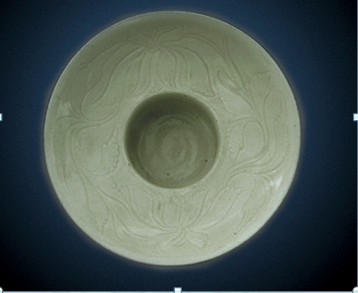
What is a “Spittoon” (Zā Dǒu)?
First, to understand a “carved spittoon,” one must first know what a “spittoon” is.
- Function: A spittoon, also known as a “saliva receptacle” or “spit pot,” was a sanitary vessel primarily used for holding food scraps, bones, tea residue, or saliva. Its characteristic shape is: wide mouth, constricted neck, and a globular or bulging belly. The wide rim made it easy to receive and discard waste, while the narrow neck prevented contents from splashing and made it easy to hold with one hand.
- Usage Context: It was widely used in settings like banquets and tea gatherings. In ancient times, especially during the Song and Yuan dynasties, the spittoon was an indispensable item at gatherings of literati and scholars for drinking wine and tasting tea, reflecting the elegance and hygiene habits of ancient people.
- Materials: Spittoons were made from various materials, including ceramic (such as celadon, white porcelain, Qingbai ware, Yaozhou ware, Longquan ware, etc.), metal (like gold, silver, bronze), lacquerware, etc., with ceramic being the most common.
The “Carved” Technique
“Carving” is a technique used to decorate ceramic bodies.
- Process: When the ceramic body is half-dry, in a leather-hard state, various patterns are incised into the surface using tools made of bamboo, wood, or metal.
- Artistic Effect: The carved lines are deep and shallow, fluid and powerful. After glazing and firing, because the glaze accumulates in the incised areas making them darker, or the body’s natural color shows through, the pattern exhibits variations in shade, creating clear layers and a three-dimensional effect, much like shallow relief sculpture.
- Popular Periods: The carving technique reached its peak during the Song Dynasty, especially in northern Yaozhou Ware and southern Longquan Ware and Ding Ware, among others. Their carving skills were exquisite and became renowned products of their time.
Comprehensive Interpretation of the “Carved Spittoon”
Combining the two, a “carved spittoon” refers to a spittoon decorated using the carving technique. It is not only a practical vessel but also a fine piece of artwork.
Main Characteristics:
- Classic Shape: Possesses the standard spittoon form with a wide mouth, narrow neck, and globular or bulging belly.
- Exquisite Decorations: The body (usually on the belly and below the rim) is carved with various patterns. Common motifs include:
- Floral and Plant Patterns: Peonies, lotus flowers, scrolling vines, arabesques, etc., symbolizing wealth and nobility, purity, etc.
- Animal Motifs: Fish swimming in waves, mandarin ducks, phoenixes, children at play, etc., full of vitality and charm.
- Geometric Patterns: Fret patterns, lotus petal patterns, etc., often used as border decorations.
- Products of Famous Kilns: Fine carved spittoons often came from renowned kilns.
- Yaozhou Ware Carved Spittoons: Famous for their sharp, free, and effortless carving style, dense intricate patterns, and strong three-dimensional effect. The designs, under the green glaze, showed clear contrasts in depth, praised as “skillful as casting metal, refined as carving jade.”
- Longquan Ware Carved Spittoons: The patterns, under the thick, lustrous Fenqing (powdery blue) or Meizi Qing (plum green) glaze, are subtly revealed. Their style is more restrained and introspective compared to Yaozhou ware, elegant and serene.
- Jingdezhen Qingbai Ware Carved Spittoons: The patterns, set against the sparkling and smooth Qingbai glaze, are clear, elegant, and beautiful, with excellent light and shadow effects.
Historical and Cultural Value
- Embodiment of Era Aesthetics: The popularity of carved spittoons, especially during the Song and Yuan periods, reflects the social trend of pursuing an elegant and refined lifestyle. It evolved from an everyday object into a carrier of the aesthetic taste of the literati.
- Testament to Craftsmanship: A finely made carved spittoon combines (form design), carving skill, glaze formulation, and firing control, representing the highly concentrated,advanced level of contemporary ceramic manufacturing.
- Collectible Value: Today, ancient carved spittoons, especially well-preserved fine pieces from famous kilns, are highly sought-after categories in the art market, possessing significant historical, artistic, and economic value.
In summary, the “carved spittoon” is a product of the perfect integration of ancient Chinese material culture and aesthetic art. It served the elegant daily life of ancient people while, with its unique carved decorations and beautiful form, becoming an exquisite window through which we today can glimpse the social customs and artistic achievements of ancient times.