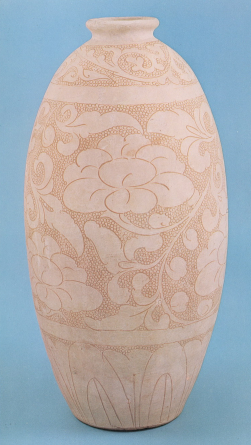
The “Cizhou Kiln floral vase” you mentioned is a classic category in art collection. It does not refer to one specific object but is a general term for a type of vase produced by the Cizhou kiln system since the Song Dynasty, characterized by floral motifs as their primary decoration.
Below is a comprehensive introduction to the characteristics, artistic value, and cultural significance of the Cizhou Kiln floral vase.
1. Introduction to the Cizhou Kiln
The Cizhou Kiln was the largest ancient system of northern folk kilns in China. Its main sites were around Guantai and Pengcheng Town in Ci County, Hebei Province. Its production began in the mid-Northern Song Dynasty, continuing through the Jin, Yuan, Ming, and Qing dynasties, and persists to this day. There is a saying, “Jingdezhen in the South, Pengcheng in the North.”
Core Characteristics:
- Folk Kiln Nature: Unlike the refinement and elegance of official kilns, the Cizhou Kiln served the mass public market. Its style is rugged, bold, rustic, and lively.
- Black Flowers on White Ground: This is the most representative decoration technique of the Cizhou Kiln. A layer of white slip was applied to the greyish or off-white body. Designs were then painted using iron-rich pigment (ocher, banhua stone), and finally, a transparent glaze was applied before firing. This resulted in the striking contrast of black designs on a white background, creating a fresh and vibrant visual effect.
2. Typical Features of Floral Vases
Shapes
Cizhou Kiln vases came in various forms, commonly including:
- Meiping (Prunus Vase): Small mouth, short neck, full shoulders, slender base, and a ring foot. The shape is tall and elegant, often used for storing wine or as an ornament.
- Yuhuchunping (Flask Vase): Flared mouth, slender neck, rounded, dropping belly, and a ring foot. The form is graceful and gentle, a classic decorative vase.
- Rolled-lip Vase: Externally rolled rim, long neck, and a rounded belly.
- Straight-neck Vase: Straight, upright neck, giving a more dignified overall impression.
Floral Motifs and Painting Style
Cizhou Kiln artisans applied techniques from traditional Chinese ink wash painting to porcelain decoration. Their floral motifs are full of the flavor of folk life and vitality.
- Common Flowers:
- Peony Patterns: Symbolizing wealth and honor, this was the most common theme. The painting is unrestrained, with full petals and spreading leaves, full of movement.
- Lotus Patterns: Symbolizing purity, integrity, and auspiciousness. Often depicted with leaves and seed pods, the composition is fresh and natural.
- Chrysanthemum Patterns: Symbolizing hermitism and longevity. The lines are smooth and resilient.
- Interlocking Florals (Scrollwork): Stems and vines of various flowers intertwine to form a continuous pattern, implying endless life. The composition is dense yet orderly.
- Artistic Style:
- Freehand and Unrestrained: The painting style was deeply influenced by Chinese freehand brushwork (Xieyi), not pursuing the precision of fine-brushwork (Gongbi) but focusing on spirit and brushstroke charm. The artisans wielded their brushes swiftly, with smooth and bold lines, sketching the form and spirit of flowers with just a few strokes.
- Full Composition: The designs typically occupied the main part of the vase body. The layout balanced density and sparsity with clear primary and secondary elements, creating a very strong visual effect.
- Strong Sense of Daily Life: Compared to the stylized patterns of official kilns, Cizhou Kiln flowers were closer to nature, possessing more rustic charm and vitality.
Manufacturing Technique
- Use of Slip: The clay body of Cizhou ware was relatively coarse and dark in color. To achieve a white background, artisans first applied a layer of white slip to the body. This was like applying “foundation” to the porcelain, upon which they could then paint and apply the glaze. This is the core technique of Cizhou Kiln.
- Iron Brown Flowers: This refers to the “black flowers on white ground.” As the black pigment was actually iron oxide, which produced an iron-rust color, it earned this name.
3. Artistic and Collectible Value
- A Medium for Chinese Painting and Calligraphy: The Cizhou Kiln perfectly integrated Chinese painting and calligraphy with ceramic craftsmanship, making it a valuable resource for studying ancient folk painting and calligraphy.
- The Pinnacle of Folk Aesthetics: It represents the highest level of Chinese folk aesthetics since the Song Dynasty. Its simple, candid, and lively artistic style forms a tripartite balance with scholarly art and court art.
- A Mirror of History and Culture: The decorations on these vases reflect the aesthetic tastes, auspicious beliefs, and life ideals of the common people at the time.
- The Collectors’ Market: Cizhou Kiln floral vases in good condition, with exquisite painting and elegant shapes, are highly sought after in the auction market. Pieces from the Song and Jin periods are particularly valuable. Items from the Yuan, Ming, and Qing dynasties also hold significant collectible value.
The Cizhou Kiln floral vase is not merely a utilitarian vessel or ornament; it is a crystallization of the daily life and art of the northern Chinese folk during the Song and Yuan periods. With its striking contrast of black on white, its free and easy painting style, and its vibrant floral decorations, it holds a unique place in the history of Chinese ceramics and is treasured worldwide as an artistic gem.