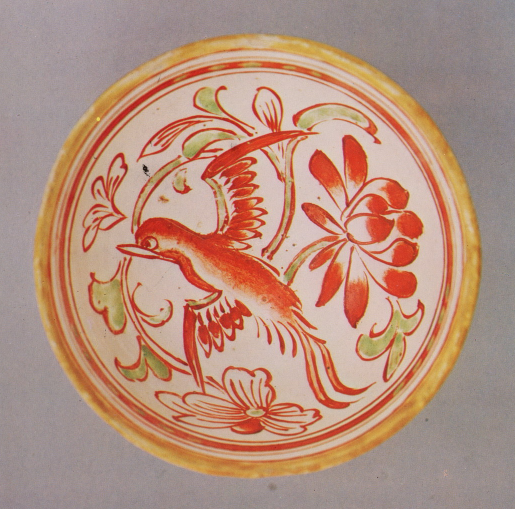
I. Object Overview
- Period: Yuan Dynasty (13th–14th centuries)
- Kiln: Cizhou Kiln (North China folk kiln system)
- Form: Dish (commonly a large, shallow dish or plate, sometimes with a foliated rim, reflecting the Yuan taste for substantial forms)
- Core Motif: Bird-and-Flower Design (depicting birds amidst flowering plants)
- Key Distinction: Polychrome Decoration – moving beyond the classic black-and-white palette.
II. Decoration & Technique: The “Polychrome” Innovation
The term “polychrome” is crucial here, indicating a significant expansion of Cizhou’s decorative language during the Yuan era.
- Low-Temperature Overglaze Enamels:
- This is the defining feature. After the initial high-temperature firing of the white-slipped, transparent-glazed body (producing a plain white dish), additional colors were applied over the glaze.
- These colors—primarily rust-red (from iron), green (from copper), and sometimes yellow and aubergine—were then fixed in a second, lower-temperature firing (around 700-900°C). This technique is a precursor to the Wucai and later Famille Verte styles.
- Combined Techniques:
- Often, the polychrome enamels were used in conjunction with the classic underglaze iron-brown painting (Baidí Hēihuā). The outlines and key details of the birds and flowers might be painted in underglaze brown, while the red and green enamels were used to fill in and accentuate areas like flower petals, leaves, or bird plumage, creating a richer, more colorful effect.
- Artistic Style:
- Bold and Uninhibited: The painting style is characteristically Yuan—confident, rapid, and less concerned with fine detail than with overall impact.
- Lively and Dense Compositions: Bird-and-flower scenes are energetic. Common birds include parakeets, pheasants, or magpies amidst peonies, lotuses, or scrolling vines. The composition often fills the dish cavity completely, creating a sense of abundant vitality.
III. Historical Context & Significance
- Cultural Synthesis: The Yuan Dynasty’s vast empire facilitated the flow of materials and ideas. The use of vibrant green and red may reflect influences from Central Asian or Middle Eastern color preferences, adapted through Chinese motifs.
- Commercial Vitality: This technical innovation demonstrates Cizhou kilns’ responsiveness to the market. Polychrome wares offered a more opulent and visually striking alternative to monochrome black-and-white, catering to a growing urban and mercantile class desiring decorative household items.
- Technical Precursor: These dishes are important milestones in the history of Chinese overglaze decoration, standing between the earlier Cizhou black-and-white ware and the magnificent polychrome porcelains of the Ming (e.g., Wucai) and Qing (Famille Verte) dynasties.
IV. Key Appreciation Points
- Color Preservation: The condition of the overglaze enamels is paramount. They are fragile and prone to wear. Look for vibrant, well-adhered color. Significant flaking or fading greatly diminishes value.
- Painting Vigor: Assess the energy and skill of the brushwork. The design should be dynamic and assured, even if broadly executed.
- Combination of Techniques: Observe how the underglaze outlines and overglaze colors interact. A skillful integration is a mark of higher quality.
- Form and Scale: Yuan dishes are often robust and generously proportioned. The form should feel substantial and well-proportioned.
- Glaze and Body: The underlying glaze should be a clear, often slightly creamy white. The exposed body (foot ring) will show the typical buff or grey Cizhou clay, which is relatively coarse.
V. Distinction from Earlier Cizhou Ware
- vs. Song/Jin Baidí Hēihuā: The fundamental difference is the polychrome palette. Song/Jin works rely on the powerful contrast of black (or brown) and white, with a more classical, often poetic restraint. Yuan polychrome ware is louder, more exuberant, and explicitly decorative.
- vs. Yuan Baidí Hēihuā: Even within the Yuan, standard black-and-white pieces exist. The polychrome version represents a more luxurious, technically advanced, and costlier product line.
VI. Summary of Value
The “Yuan Dynasty, Cizhou Kiln Polychrome Bird-and-Flower Dish” is a testament to the innovative spirit and commercial adaptability of the Cizhou kilns during a dynamic historical period. It captures the Yuan aesthetic’s shift towards boldness, visual richness, and a celebration of secular life. More than just a dish, it is a key technical link in the evolution of Chinese ceramic color decoration and a vibrant expression of the confidence and expansive taste of the Mongol era. Its value lies in its rarity compared to standard Cizhou ware, its historical importance in the development of overglaze techniques, and its undimmed visual appeal centuries later.