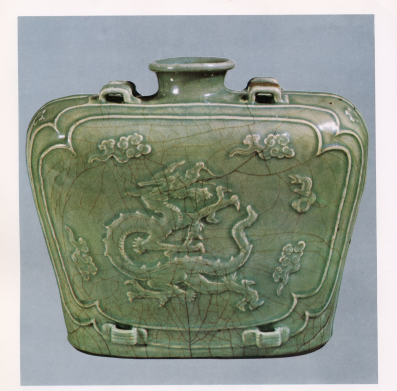
Detailed Analysis of the Object
- Form and Glaze Color
- Shape: Flat flask, also known as a “crescent moon vase” or “horse-jacket vase.” It has a flat, rounded body, a small mouth, a short neck, and often two or four loop handles on the shoulders for threading cords, making it portable. One side of the belly is prominently convex, while the other is flat or slightly convex, giving it a stable and imposing presence. This form originated from the leather flasks used by nomadic peoples for water and wine and became very popular in Yuan Dynasty ceramics and metalwork.
- Glaze Color: Typical Yuan Dynasty Longquan powdery celadon or plum green glaze. The glaze layer is thick, lustrous, and jade-like. Due to the large size of the object, noticeable glaze dripping is often seen, with deeper, more emerald green color in areas where the glaze pooled.
- Decoration Technique and Motif
- Technique: The appliqué (or molded appliqué) technique is the standout feature. Artisans first used molds to press out relief-design components, then attached them with slip to the already formed body before glazing and firing. The motifs stand out from the surface, appearing softly defined and three-dimensional beneath the thick glaze.
- Dragon Motif:
- The dragon is typically depicted with three or four claws (common for Yuan dragons, as five-clawed dragons were strictly regulated for imperial use). The dragon’s body is vigorous, with a slender neck, long torso, and powerful limbs, full of dynamism.
- The dragon is often prominently placed on the convex central area of the flask’s belly, shown as a coiling dragon or a dragon chasing a flaming pearl, creating a majestic effect.
- Besides the main dragon motif, the flask body is often adorned with supplementary appliqué designs like clouds, waves, or pearl motifs, creating a richly detailed composition.
- Other Decoration: The body might also feature carved designs like scrolling flowers or lotus petals (often on the neck, shoulders, or foot), forming a clear hierarchy with the main appliqué dragon motif.
- Craftsmanship and Body
- Body: Yuan Dynasty Longquan clay was less refined than in the Southern Song. The body is generally thick and heavy, especially for large vessels. The body color is grayish-white or grayish-brown.
- Construction: The flat flask was made in sections and joined. Seams are not obvious under the glaze but can be detected upon close inspection. The base usually shows firing support marks. The foot ring is neat, and exposed body areas often show a “fire-red” or orange-red hue due to secondary oxidation.
Artistic and Market Value
- Artistic Value: Such objects perfectly blend the bold spirit of the Mongols, the exquisite ceramic skills of Han Chinese artisans, and the formal influences of foreign cultures. They are exemplary of the “international” style in Yuan ceramics. The subtle, hazy beauty of the appliqué dragon design beneath the thick glaze represents the unique aesthetic charm of Longquan ware.
- Rarity: Well-preserved, large Yuan Dynasty Longquan appliqué flat flasks are extremely rare today. Those with clear decoration and superb glaze are mostly housed in the world’s top museums.
- Market Value: In the auction market, fine Yuan Dynasty Longquan wares have always been highly sought after by collectors. A flat flask with appliqué dragon design in excellent condition and with superb craftsmanship can command prices reaching millions or even tens of millions of RMB, making it a “major piece” in ceramic collections.