- Eastern Han Dynasty (23–220 AD)
- Three Kingdoms, Jin Dynasty, and Northern & Southern Dynasties (220–581 AD)
- Tang Dynasty (618–907 AD)
- Song Dynasty (960–1279 AD)
- Yuan Dynasty (1279–1368 AD)
- Ming Dynasty (1368–1644 AD)
- Qing Dynasty (1644–1911 AD
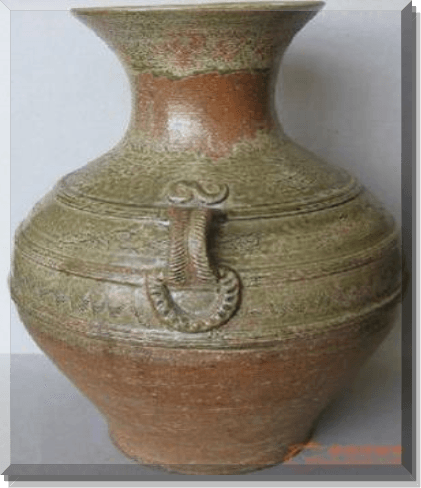
Eastern Han Dynasty (23–220 AD): The true emergence of Chinese porcelain occurred during the Eastern Han Dynasty, with celadon (green-glazed porcelain) being the most renowned. An example of an Eastern Han celadon jar is shown below.
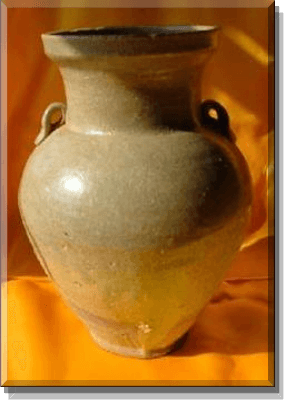
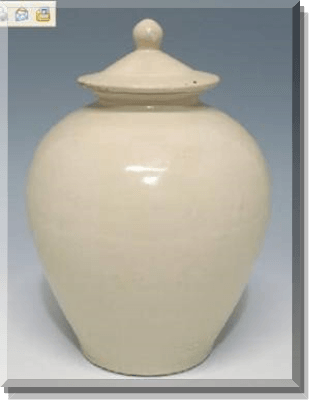
Tang Dynasty (618–907 AD): During this period, northern white porcelain and celadon flourished side by side. Examples include the Tang Dynasty white porcelain “Wannian Jar” and the Tang Dynasty celadon jar with brown splashes, as shown below
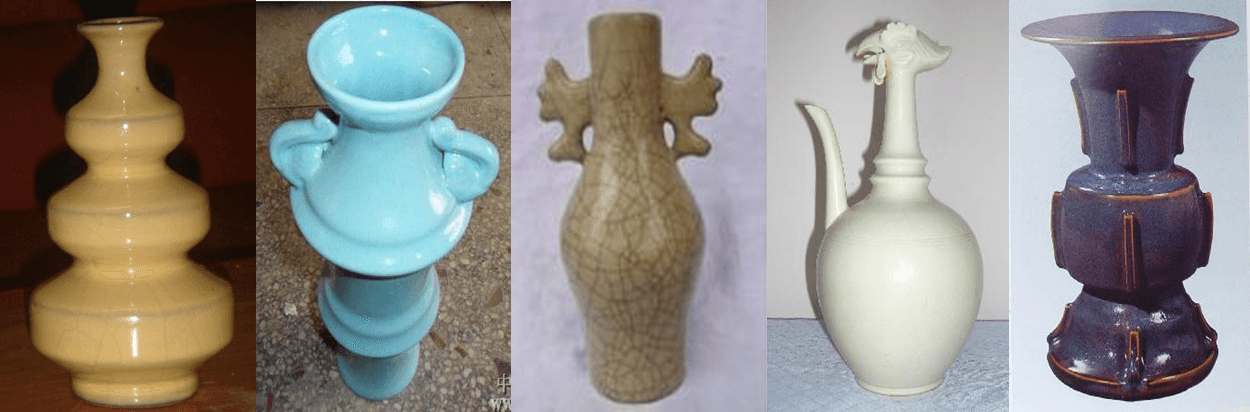
Song Dynasty (960–1279 AD): Building upon the achievements of the Tang Dynasty, the Song Dynasty saw the rise of the “Five Great Kilns”: Ding, Ru, Guan, Ge, and Jun. Examples include the Guan ware trumpet-necked vase, Ru ware flower vase, Ge ware double-eared vase, Ding ware cockscomb-shaped pot, and Jun ware porcelain, as shown below.
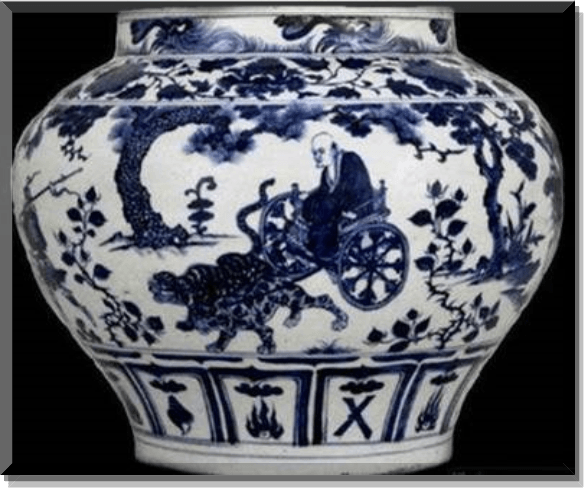
Yuan Dynasty (1279–1368 AD): This period marked a transitional phase in Chinese porcelain production, bridging past traditions with new innovations across multiple aspects. The Yuan government established the “Fuliang Porcelain Bureau” in Jingdezhen, Jiangxi province. Blue-and-white porcelain (qinghua) became the most celebrated style of this era. Below is the renowned Yuan blue-and-white piece “Guiguzi Descending the Mountain.”
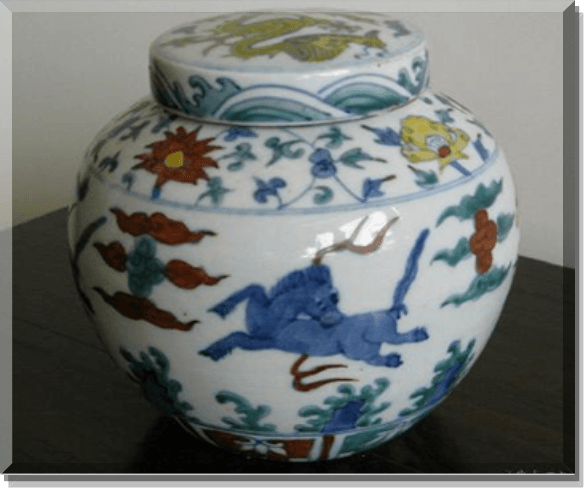
Ming Dynasty (1368–1644 AD): This period represents the golden age of Chinese porcelain production, when both the quantity and quality of ceramics reached their zenith. The Ming Dynasty saw the emergence of doucai (contending colors) porcelain, a groundbreaking polychrome technique that combined underglaze blue outlines with vibrant overglaze enamels.
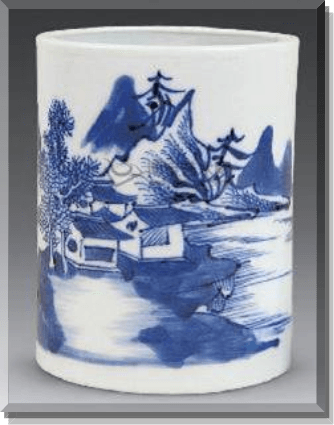
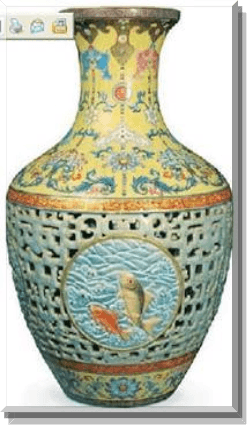
Qing Dynasty (1644–1911 AD): The porcelain craftsmanship of the Qing Dynasty reached glorious heights, with the reigns of Kangxi, Yongzheng, and Qianlong emperors representing its pinnacle. Kangxi period became most celebrated for its blue-and-white (qinghua) porcelain, while Yongzheng and Qianlong periods saw famille rose (fencai) decoration achieve its zenith. Examples shown below include a Kangxi blue-and-white brush holder and a Qianlong famille rose porcelain vase with openwork design.