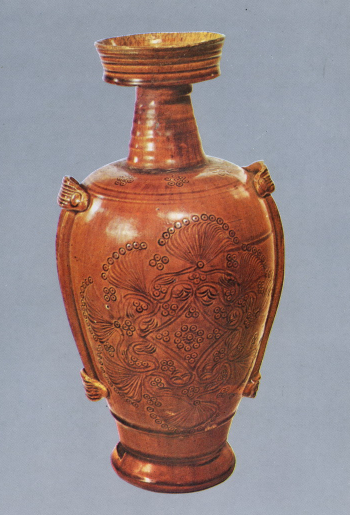


I. Object Overview & Chronological Significance
- Period: Five Dynasties to Northern Song Dynasty (c. 10th–early 11th centuries). This dating is specific and significant, placing the object in the post-Tang interregnum and the formative century of the Song.
- Kiln Affiliation: Northern Folk Kilns (widespread production across Hebei, Henan, Shanxi, Shaanxi). It is a generic type produced by many kilns, not exclusive to a single complex like Cizhou.
- Form: Dish-Mouthed Bottle (Pánkǒu Píng). The name is derived from its distinct, saucer-or plate-like mouth.
- Key Feature: Monochrome Brown Glaze (sometimes approaching black or chestnut), typically applied over a buff or grey stoneware body.
II. Form & Function: A Legacy of the Tang
The shape of this bottle is its most eloquent historical statement.
- Formal Characteristics:
- Wide, Flaring Dish Mouth: The defining feature. It is both practical (for filling and decanting) and highly decorative, creating a strong visual focus.
- Tall, Slender Neck: Often gracefully curved or slightly trumpet-shaped.
- Ovoid or Rounded Body: Provides ample storage capacity.
- Low, Unassuming Foot: Grounds the elegant silhouette.
- The overall profile is one of balanced elegance, verticality, and rhythmic curvature.
- Functional Purpose & Precedents:
- Primary Use: A storage vessel for liquids, likely wine or spirits.
- Tang Dynasty Heritage: The pánkǒu form is a direct descendant of Tang dynasty metalwork and ceramic shapes (visible in Tang gold/silverware and Changsha guan ware). Its persistence into the early Song illustrates the cultural and aesthetic lag between dynastic change and material culture, where beloved and functional forms outlive political eras.
III. Glaze & Technique: The Beauty of Simplicity
- The Brown Glaze:
- Chemistry: An iron-based glaze, fired in an oxidizing kiln atmosphere. The exact shade—ranging from yellowish-brown and amber to dark chestnut and near-black—depends on the iron concentration and firing conditions.
- Application: Usually applied in a single layer, often stopping short of the foot in a distinct, irregular glaze line, revealing the body. This technical feature becomes an aesthetic one.
- Texture & Effect: The glaze can be opaque or semi-translucent, sometimes with subtle teardrop-like accumulations (youlie). Its beauty lies in its depth, warmth, and unadorned, earthy character.
- Body and Making:
- The body is typically a fine-grained buff, grey, or white stoneware. It was thrown on the wheel, with the mouth, neck, and body often thrown separately and joined.
- The focus is entirely on the purity of form and the sensuous quality of the glaze, prefiguring the Song aesthetic appreciation for monochrome glazes and subtlety.
IV. Historical Context: From Tang Opulence to Song Refinement
- A Bridge Between Eras: This bottle sits at the crossroads. Its shape is Tang in its confidence and flamboyance (the dish mouth), while its monochrome glaze and restrained elegance point towards the coming Song taste for understatement and natural beauty.
- Widespread Popularity: Its production across numerous northern kilns indicates it was a standard, successful container type, meeting the needs of a society in transition.
- Archaeological Value: Found in tombs of this period, it serves as a reliable type fossil for archaeologists, helping to date burial contexts.
V. Key Appreciation Points
- Silhouette and Proportion: The essence of the object. The curves of the mouth, neck, and body should flow in a harmonious, rhythmic, and stable manner. The best examples have an unforgettable, statuesque grace.
- Glaze Quality and Color: The glaze should be intact, richly colored, and lustrous. Look for an even application and an appealing, natural hue. The contrast between the glazed surface and the exposed foot can be striking.
- Condition: As a utilitarian storage vessel, it should show signs of honest use but remain structurally sound. Check the rim of the delicate dish mouth and the joins for damage or restoration.
- Patina of Age: A soft, natural wear on the high points of the glaze and body adds to its authenticity and character.
VI. Distinction from Later Wares
- vs. High Song Classical Wares (e.g., Ding, Qingbai): This bottle is more robust and less refined. It lacks the extreme technical finesse, thin potting, and precise ivory or bluish-white glazes of peak Song imperial or elite wares. It represents a mainstream, high-quality folk tradition.
- vs. Cizhou Ware: It is fundamentally different. This is a monochrome, form-focused vessel, whereas classic Cizhou is defined by decorative contrast (white slip and painted/incised design).
Summary of Value
The “Five Dynasties to Northern Song Dynasty, Brown-Glazed Dish-Mouthed Bottle” is a touchstone of early medieval Chinese ceramic design. Its value is multifaceted:
- Historical: It is a tangible link between the Tang and Song worlds, embodying a continuity of form amid dynastic change.
- Aesthetic: It celebrates the intrinsic beauty of form and a naturally derived glaze color, principles that would come to define the Song ceramic canon.
- Sculptural: As an object, it possesses a timeless, sculptural quality where every proportion and curve contributes to a serene and powerful whole.
It is not a vessel that shouts with decoration, but one that speaks quietly and eloquently through its perfectly resolved shape and the deep, warm glow of its iron-rich glaze—a masterpiece of early Song vernacular potting.