1. Historical Context
- Ming and Qing Dynasties (14th–19th centuries): Jingdezhen blue-and-white porcelain peaked during the Yongle and Xuande reigns of the Ming Dynasty and further developed during the Kangxi, Yongzheng, and Qianlong reigns of the Qing Dynasty. Blue-and-white ware, painted with cobalt pigment and fired underglaze, is known for its elegant blue tones, durability, and timeless appeal.
2. Form and Shape
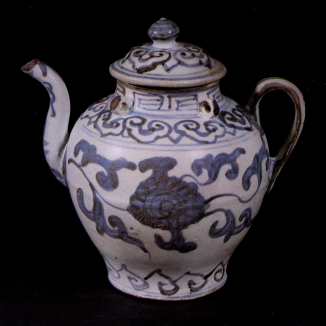
- Teapot: Refers to a vessel with a handle (执柄) and a spout (流嘴), typically used for serving tea or wine. Shapes vary, such as pear-shaped or inspired by the “Yuhuchun” style, balancing functionality with aesthetics.
- Size: Generally 10–20 cm in height, designed for practical use.
3. Decorative Characteristics
- Floral Patterns: Common motifs include peonies, lotuses, chrysanthemums, and intertwining vines, symbolizing prosperity and good fortune. The composition is carefully arranged with fluid brushwork.
- Blue-and-White Coloring: Ming Dynasty examples often feature intense, diffused blue tones, while Qing Dynasty pieces display richer gradations and clearer layers.
- Layout: The main body is adorned with floral designs, complemented by border patterns (such as fretwork or lotus petals). The spout and handle may also feature minor decorative elements.
4. Craftsmanship and Technique
- Body and Glaze: The porcelain body is fine, white, and smooth, covered with a glossy, translucent glaze that often has a bluish-white tint (亮青釉).
- Cobalt Pigment: Ming Dynasty pieces frequently used imported “Sumali” cobalt, while Qing Dynasty artisans employed domestic materials like Zhejiang or Zhuming cobalt.
- Firing Process: High-temperature single firing ensures the blue pigment bonds deeply with the body, making it resistant to wear.
5. Collection and Authentication
- Authenticity Identification: Key factors include the weight and texture of the body, the glaze’s luster, the tone of the blue pigment, and the style of brushwork. Replicas may have overly white bodies or stiff, unnatural patterns.
- Market Value: Imperial kiln pieces from the Ming and Qing dynasties command high prices, while fine examples from folk kilns also hold significant worth. Condition and the presence of markings greatly influence value.
6. Cultural Significance
- Blue-and-white porcelain represents the pinnacle of Chinese ceramic art and was widely exported via the Maritime Silk Road, influencing ceramic traditions worldwide.
- Teapots like this exemplify the fusion of practicality and artistry, reflecting the integration of scholarly aesthetics into daily life.