Core Characteristics and Value
- Form and Dimensions:
- Shape: Monumental and majestic (typically around 63-65 cm in height). The flat flask (or vase) shape was influenced by Middle Eastern metalwork, adapted to the lifestyle of Islamic regions, reflecting the frequent cultural exchanges during the Yuan Dynasty.
- Unique Design: The elephant-head handles on the neck are a key feature, symbolizing “peace and prosperity” (Taiping You Xiang), representing auspiciousness and nobility.
- Decoration and Craftsmanship:
- Blue Pigment: Uses imported “Sumali” cobalt. After firing, the color is rich and vibrant, with distinct silvery-black iron rust spots and a diffused effect, creating a deep, layered appearance.
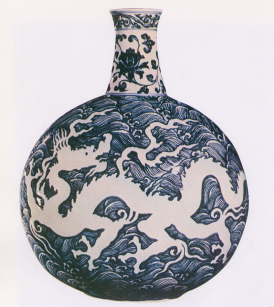
- Main Motif: The central body features a large three or four-clawed white dragon soaring through turbulent waves, powerful and dynamic—a hallmark of Yuan dragon imagery.
- Secondary Patterns: The vessel is decorated in over ten layered bands from top to bottom, including chrysanthemum scrolls, banana leaves, flying phoenixes, lotus scrolls, waves, precious objects, and stylized lotus petals. The composition is intricate yet orderly, with clear hierarchy, a style also influenced by Islamic decorative arts.
- Reserved White Technique: The so-called “white dragon” is created by reserving the dragon’s body in white, while the background of waves, clouds, etc., is painted in deep blue, making the white dragon stand out—a striking artistic effect.
- Historical and Chronological Value:
- “Zhizheng 11th Year” Inscription: One vase in the British Museum bears an inscription on the neck: “Zhang Wenjin, a devout disciple from… piously donates an incense burner and a pair of flower vases… praying for the family’s peace and children’s safety. Dedicated on an auspicious hour in the fourth month of the 11th year of the Zhizheng reign (1351 CE). Offered by Marshal Hu Jingyi at the Xingyuan Ancestral Hall.” This inscription confirms its production date.
- Status as a Standard Reference: Precisely because of this clear date, museums and scholars worldwide classify blue-and-white porcelain consistent with this vase’s style, craftsmanship, and materials as “Zhizheng-type,” making it the absolute benchmark for authenticating other Yuan blue-and-white wares.
Historical Context and Significance
- Yuan Dynasty Innovation at Jingdezhen: Potters at Jingdezhen mastered the kaolin-clay (porcelain stone binary formula) technique, enabling them to fire large vessels without deformation. Simultaneously, blue-and-white porcelain technology reached full maturity and became a major export commodity.
- Crystallization of International Trade: Such large vases were not for domestic daily use; their primary market was the courts and nobility of the Middle Eastern Islamic world. Their form, size, and dense decoration catered to their aesthetic tastes. The cobalt pigment (Sumali) also originated from Persia, serving as early evidence of globalized trade.
- Artistic Pinnacle: It combines Yuan ceramic technology, painting artistry, and cultural exchange, representing the highest achievement in 14th-century global ceramic art.
Preservation and Collection
- Complete, dated Yuan blue-and-white dragon vases like this are extremely rare. Besides the famous pair in the British Museum, similar objects are housed in other top museums like the Topkapi Palace Museum in Turkey and the National Museum of Iran, though patterns and sizes vary.
- Within China, institutions like the Palace Museum in Beijing and the National Museum of China also hold Yuan blue-and-white flat flasks or similar items with dragon designs, but only the British Museum holds the ones with the “Zhizheng 11th year” inscription.