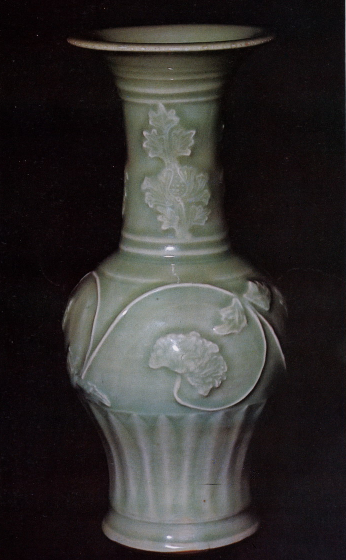
1. Object Naming and Form
- “Gonghua” Vase: The term vividly captures the defining feature of this piece. “Gonghua” refers to the raised, relief-like decorative patterns adorning the vase’s body. This technique gained significant popularity in Yuan Dynasty Longquan ware and serves as a key stylistic marker, distinguishing it from the more restrained and minimalist aesthetic of Song Dynasty Longquan.
- Form: The most common form for such vases is the “Yuhuchun Ping” , characterized by a flared mouth, slender neck, rounded belly, and a ring foot, resulting in an elegant and harmonious profile. While other shapes—such as the “phoenix-tail” vase—are also found, the Yuhuchun silhouette is particularly prevalent. Its smooth, flowing lines offer an ideal surface for showcasing raised decorative elements.
2. Typical Characteristics of Yuan Dynasty Longquan Ware
Unlike Song Dynasty Longquan ware, which emphasized a jade-like glaze quality and subtle elegance, Yuan Dynasty Longquan evolved toward a more robust, monumental, and richly decorated style.
- Body: Yuan pieces are generally thicker and heavier than their Song counterparts, with a relatively coarse, grayish-white clay body.
- Glaze Color: While classic Song glazes such as powder-blue (“fenqing”) and plum-green (“meiziqing”) continued, Yuan glazes often shifted toward greenish-yellow or greenish-turquoise tones. The glaze remained thick but acquired a stronger luster, exhibiting a slightly more glass-like quality compared to the softer, matte finish of Song wares.
- Decoration Technique: The “Gonghua” technique—appliqué or molded appliqué decoration—is the most iconic ornamental method of this period. Artisans first molded motifs into thin clay plaques, attached them to the unfired body, then applied a thick glaze before firing. Under the glaze, the raised designs exhibit slightly softened edges due to glaze flow during kiln firing, creating a hazy yet three-dimensional effect reminiscent of reflections in water.
- Common Motifs: Popular decorative themes included flowers (peony, chrysanthemum, lotus), cranes and clouds, dragons and clouds, Buddhist emblems, lychee, turtles and cranes, the Eight Immortals, and other auspicious symbols. Compositions tended to be lush, densely arranged, and carefully structured.
3. Artistic and Technical Value of the “Gonghua” Vase
- Integration of Skill and Art: This vase exemplifies the exceptional skill of Yuan Dynasty Longquan potters in mastering both thick glaze application and three-dimensional decoration. Achieving sharp, well-defined relief patterns while maintaining an even, lustrous glaze was a significant technical challenge.
- Vehicle of Period Aesthetics: It reflects the Yuan Dynasty’s preference for ornate, bold, and visually rich designs, as well as adaptations made to appeal to international markets—particularly in West Asia and the Islamic world—through thriving maritime trade.
- Scarcity and Preciousness: A well-preserved Yuan Dynasty Longquan Gonghua Vase, especially one with superior glaze color and crisp decoration, is highly prized among major museums and collectors worldwide, representing a masterpiece of Yuan ceramic art.
4. Key Points for Collection and Authentication
- Examine the Glaze Luster: Authentic Yuan pieces display a soft, inner glow—often described as “bao guang” (treasure light)—or subtle signs of age-related wear. They should not exhibit a harsh, overly shiny “new light” (“zei guang”).
- Examine the Decoration: The raised “Gonghua” motifs should appear three-dimensional yet softened at the edges under the glaze, giving an “immersed” quality. The choice and arrangement of motifs should align with typical Yuan stylistic conventions.
- Examine the Foot Rim: The base of most Yuan pieces is unglazed. The exposed body often shows natural firing marks such as “huo shi hong” (oxidized reddish patches), and the clay should appear dry and aged.
- Examine the Overall Vitality (“Qi Yun”): Yuan ceramics convey a sense of robustness and dynamic tension. Even elegantly shaped forms like the Yuhuchun vase possess a bold, substantial presence.