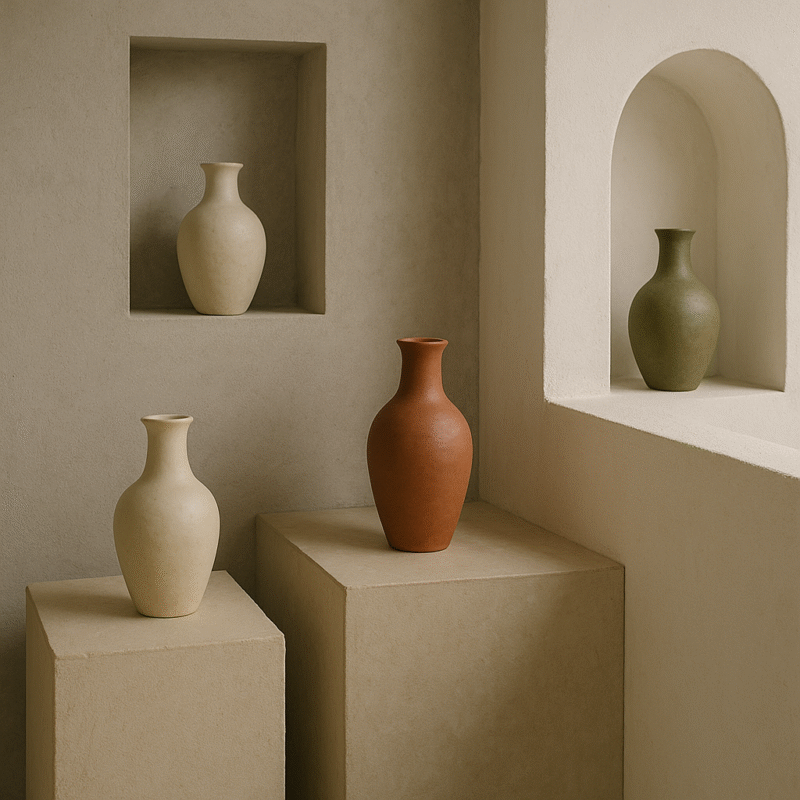
1. Historical Origins: The Birth of Ceramics in Spatial Aesthetics
Ceramic vases and figurines are among the earliest objects used for space decoration in China, with their origins tracing back to the Neolithic period’s painted pottery culture. Initially, these items were primarily functional as containers or religious ritual vessels, but even then, they displayed a certain aesthetic design.
With the influence of the Shang and Zhou dynasties’ bronze civilization, ceramic shapes became more standardized, and objects began to acquire symbolic meanings. By the Han Dynasty, the use of ceramic figurines and mingqi (funerary objects) as grave goods marked the beginning of ceramics as “decorative items.”
During the Tang and Song Dynasties, ceramic-making technology reached maturity with the emergence of high-fired porcelain. The shapes and glazes of items like vases, pen holders, and incense burners reached new heights. Ceramics were no longer solely utilitarian but became elegant ornaments for scholars’ studies.
In the Ming and Qing Dynasties, porcelain became the centerpiece of imperial and domestic decoration, with the vase (symbolizing “peace” in Chinese culture) becoming a must-have item for emperors and scholars alike, fulfilling both aesthetic and symbolic functions.
Thus, ceramics evolved from utilitarian objects to carriers of space decoration, driven by the maturation of aesthetic consciousness and the rising cultural demands of social classes.
2. Why Are Ceramics Used for Space Decoration?
1. The Beauty of Material
- Ceramics can be freely molded, offering great versatility.
- The glaze is smooth and lustrous, with lasting color that doesn’t fade or corrode.
- The reflective quality of ceramics in natural or artificial light enhances the ambiance of a space.
2. Cultural Symbolism
- The vase symbolizes “peace” (“瓶安” sounds “Pinan”).
- The round shape represents “completeness.”
- Patterns like dragons, phoenixes, peonies, and landscapes symbolize power, wealth, longevity, and beauty.
- In Western cultures, ceramics also represent “family heritage” and a sense of refined living.
3. Adaptability
Ceramics fit well in different design styles:
| Style | Ceramic Representation |
|---|---|
| Chinese | Blue and white, famille rose, ancient glaze |
| European | Rococo-style relief ceramics |
| Modern | Minimalist matte-glazed vases |
| Rustic, Wabi-sabi | Handcrafted pottery, wheel-thrown vessels |
3. Logic Behind Choosing Ceramics for Space Decoration
1. Functional Demands of Different Spaces
| Space | Recommended Ceramics |
|---|---|
| Entrance | Statement vases, figurines, to create a visual focal point |
| Living Room | Large vases, pair vases, or art figurine sets |
| Dining Room | Small decorative pieces, fruit bowls, warm-toned ceramics |
| Study Room | Scholar’s ceramics, antique-style vases, inkstone ceramics |
| Commercial Spaces | High-gloss sculpted ceramics, thematic figurines |
| Hotel Lobbies | Oversized glazed vases, art ceramic installations |
4. Application of Ceramic Vases and Figurines
1. Vases: Dual Function as Containers and Sculptures
- Empty vases can serve as stand-alone sculptures.
- Pair with dry branches or plants to create soft, decorative landscapes.
- Use varying heights for visual rhythm and balance.
2. Figurines: Visual Focal Points and Cultural Symbols
- Single figurines can serve as “space anchors.”
- Grouped figurines create depth and a narrative feel.
- Themed figurines (e.g., landscape series, zodiac) add a layer of cultural or personal significance.
5. The Evolution of Ceramic Decoration from Ancient to Modern Times
| Period | Purpose | Key Features |
|---|---|---|
| Ancient | Rituals, offerings, power symbolism | Ceremonial, symbolic forms |
| Scholar Era | Decorative “elegant play” for scholars | Aesthetic and symbolic pursuits |
| Modern | Interior decoration, art pieces | Style-specific, blending materials |
| Contemporary Art | Installation art, cross-disciplinary designs | Conceptual and personalized expression |
6. Modern Ceramic Decoration Selection Guide (Practical Tips)
✔ Consider space style: Traditional styles prefer colorful glazes, while modern spaces lean towards geometric shapes or matte finishes.
✔ Pay attention to size and proportion: The vase height should be around 1/3 to 1/2 of the height of the space it’s placed in for visual stability.
✔ Take into account color balance: Dark tones pair well with shiny glazes, while light-toned spaces benefit from soft, muted glazes.
✔ Think about functionality: Will the vase hold flowers? Should it be water-resistant? Or is it purely decorative?
7. Conclusion: Ceramics as Both Objects and the Language of Space
From ancient ritual vessels to modern home decor items, ceramic vases and figurines not only serve functional purposes but also act as carriers of human aesthetic expression and cultural projection.
They persist in our living spaces:
Even as times change, humans still need a “beautiful container” to express peace, taste, and cultural identity.
Ceramics, in this sense, are among the most enduring and soulful of mediums.