Introduction
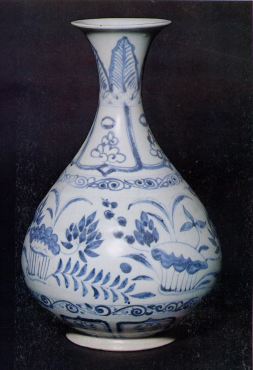
The Yuan Dynasty Blue-and-White Lotus Pond Yuchun Bottle stands as an extraordinary representative of Chinese porcelain, epitomizing the zenith of ceramic artistry during the 13th–14th centuries. This piece harmoniously blends an elegant form, masterful craftsmanship, and culturally rich decoration, making it one of the most coveted artifacts in art history.
The Form: Yuchun Bottle
The Yuchun bottle is a timeless ceramic shape whose name derives from the Tang Dynasty poetic phrase “the jade pot heralds spring.” Characterized by a flared mouth, slender neck, rounded belly, and ring foot, its flowing contours evoke the grace of spring willow branches. Originally designed as a wine vessel, it evolved into a decorative object by the Yuan Dynasty, when artisans modified its proportions—thickening the neck and expanding the belly—to achieve a more balanced and substantial presence.
Historical Context: Yuan Blue-and-White Porcelain
The Yuan Dynasty marked a transformative era for blue-and-white porcelain. With access to premium Persian cobalt pigment known as “Sumali Blue,” Jingdezhen kilns achieved unprecedented brilliance in glaze and color. Yuan blue-and-white ware is distinguished by intricate, densely layered designs, vivid cobalt-blue hues, and a translucent glaze with a slight bluish tint. Many pieces, including this bottle, were created for export to West Asia and the Middle East, resulting in decorative motifs that often fused Chinese and Islamic artistic traditions.
Decoration: The Lotus Pond Motif
The lotus pond scene is the centerpiece of this bottle’s decoration, capturing the vitality of a summer wetland ecosystem. Key elements include:
- Lotus flowers and leaves: Rendered in full, expressive forms that balance realism with stylization.
- Waterfowl: Typically mandarin ducks, egrets, or teals, depicted in pairs to symbolize harmony and auspiciousness.
- Aquatic plants: Reeds, water weeds, and duckweed fill the background, enhancing the sense of a lush, immersive landscape.
Artistic Style
The composition exemplifies the Yuan preference for “full coverage” decoration, where the painted scene wraps continuously around the vessel without overwhelming its form. The brushwork is dynamic and assured—lotus leaves are often painted in a distinctive “gourd-shaped” style, while birds and plants are rendered with lively, naturalistic detail.
Symbolism
Beyond its aesthetic appeal, the lotus pond motif carries deep cultural meaning. It evokes themes of purity, integrity, marital harmony, scholarly success, and a literati-inspired appreciation for nature—a reflection of Confucian and Daoist ideals prevalent during the period.
Craftsmanship and Rarity
Crafting such a piece required exceptional skill. Painting a coherent, detailed scene on the bottle’s curved surface demanded meticulous planning and a steady hand. Surviving Yuan Yuchun bottles are exceedingly rare—far fewer exist compared to other forms like jars or meiping vases. Those adorned with complete, well-preserved lotus pond scenes are considered museum treasures.
Cultural and Market Significance
As a product of Jingdezhen—the porcelain capital of China—this bottle illustrates the technological and artistic exchange between China and the wider world via the Silk Road. It represents the first golden age of underglaze blue decoration, influencing ceramic production for centuries.
In the art market, Yuan blue-and-white porcelain occupies the highest echelon of collectibility. A comparable lotus pond Yuchun bottle sold at auction in 2016 for over $10 million USD, underscoring its status as a pinnacle of global artistic heritage.
Notable Examples
- The Jingdezhen China Ceramics Museum houses a celebrated example of this bottle, regarded as one of its defining treasures.
- Similar pieces have appeared in major international auctions, each attracting significant scholarly and collector attention.
Conclusion
The Yuan Dynasty Blue-and-White Lotus Pond Yuchun Bottle is more than a ceramic vessel—it is a synthesis of form, era, and artistry. It encapsulates the innovation of Yuan craftsmen, the cultural dialogue between East and West, and the enduring aesthetic values of Chinese art. As both a historical artifact and a masterpiece of design, it continues to captivate audiences and scholars, securing its place as an icon in the history of world art.