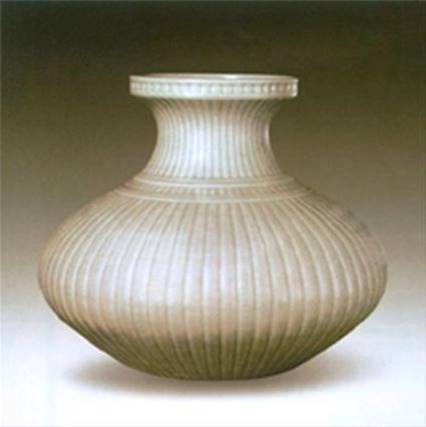


Celadon Fish-Basket Zun
The “Celadon Fish-Basket Zun” is an extremely important piece of ancient Chinese porcelain, renowned for its artistic value and historical significance. It masterfully combines a unique form, exquisite craftsmanship, and profound cultural meaning.
Here is a detailed breakdown:
1. Analysis of the Name
- Celadon (Qingyou): Refers to the glaze color. Celadon is one of the oldest and most important glaze types in Chinese ceramics. Its color range is broad, encompassing early yellowish-green and olive green to the mature powdery blue (
fenqing) and plum green (meizi qing) of the Song, Yuan, and later periods. It aims to achieve a jade-like, warm, and luminous texture. - Fish-Basket (Yulou): Indicates that the shape of the vessel is inspired by a woven bamboo fish trap. This is a form of bionic design. The body is typically squat and rounded, often adorned with raised ribbed lines imitating bamboo strips. The neck is usually constricted, and the rim is flared, creating a rustic, naturalistic form full of rustic charm.
- Zun: In ancient Chinese bronzes and ceramics, a “Zun” was a type of wine vessel. The term later evolved into a generic name for a vessel shape, typically referring to a high-status ornamental piece with a large mouth, a constricted neck, and a bulging belly.
In summary, a “Celadon Fish-Basket Zun” is a high-end ornamental ceramic piece shaped like a fish basket and coated in a celadon glaze.
2. Key Characteristics
- Shape: A flattened, globular body resembling a fish basket. The belly is often decorated with several parallel raised ribs, simulating the wrapped strands of bamboo. It has a somewhat long, constricted neck and an everted rim.
- Glaze Color: Primarily various types of celadon, such as powdery blue, pea green, or sky blue. The glaze is typically thick, opaque, and strives for a jade-like effect.
- Craftsmanship:
- Mostly produced by elite kilns, such as the Official Kilns (
Guan Yao) or Longquan Kilns, representing the highest technical standards. - Often fired on **spur supports
, resulting in an unglazed foot ring that reveals the dark, iron-rich clay body ("iron foot" ortiezu`). This contrast between the dark foot and the soft celadon glaze is a classic feature of Official ware. - The ribbed patterns on the body are carved or applied to the clay body before glazing and firing. The lines are fluid and natural.
- Mostly produced by elite kilns, such as the Official Kilns (
3. History and Kilns
The fish-basket shape was particularly popular during the Ming (especially the Yongle and Xuande reigns) and Qing (especially the Yongzheng and Qianlong reigns) dynasties.
- Ming Official Kilns: Examples from the Yongle and Xuande periods are highly treasured imperial pieces, known for their luminous glazes and robust, dignified shapes.
- Qing Official Kilns: The Yongzheng Emperor had exceptionally refined taste and particularly admired the elegance of Song dynasty ceramics. The production of bionic forms (like peach-shaped washers, pomegranate vases, and fish-basket zuns) reached its zenith during his reign. The Yongzheng Celadon Fish-Basket Zuns are considered the pinnacle of Qing monochrome glazes, with perfect proportions and flawlessly pure glaze colors.
- Longquan Kilns: The Longquan kilns also produced similar celadon fish-basket zuns during the Yuan and Ming periods, often with a vibrant bluish-green glaze and sometimes larger in size.
4. Cultural and Artistic Value
- “Following the Way of Nature” Aesthetic: The Fish-Basket Zun embodies the scholarly aesthetic of “learning from nature.” It elevates an ordinary, utilitarian object (a fish trap) into a high object of art, reflecting a philosophical ideal of returning to a state of simplicity and authenticity.
- “Comparing a Gentleman’s Virtue to Jade”: The jade-like quality pursued by celadon glazes is intimately connected to the traditional Chinese cultural association of “jade” with the virtues of a gentleman: benevolence, righteousness, wisdom, courage, and integrity. Owning a piece of warm, lustrous celadon ware was a symbol of a literati’s status and taste.
- The Pinnacle of Craftsmanship: Transforming soft clay into the resilient texture of bamboo strips and then covering it with a jade-like celadon glaze required kiln masters to have超凡 (superior) control over the clay and firing temperature. The successful firing of a Fish-Basket Zun represents the highest level of ceramic technology of its time.
Famous Examples
- Yongzheng Period, Qing Dynasty, Powder-Blue Glazed Fish-Basket Zun: Housed in the Palace Museum in Beijing. This Zun is regarded as a model of Yongzheng official ware. Its form is perfectly regular, its glaze is a delicate powder-blue, and its surface is smooth and jade-like. It is an undisputed national treasure.
- Yongle Period, Ming Dynasty, Cui-Green Glazed Fish-Basket Zun: Also an extremely precious early Ming official ware piece, with a glaze color leaning more towards a bright green and a more archaic style.
In summary, the Celadon Fish-Basket Zun is not merely a ceramic vessel. It is the perfect crystallization of ancient Chinese ceramic craft, scholarly aesthetics, and philosophical thought. With its unique bionic form and jade-like glaze, it has left a brilliant mark on the history of Chinese art.