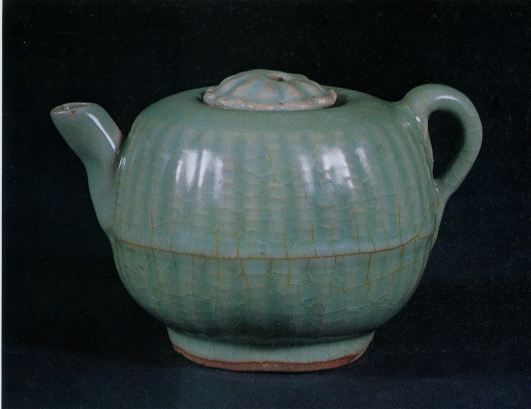


1. Kiln and Era: Southern Song Longquan Kiln
- Longquan Kiln: A famous celadon-producing kiln system in Chinese history, located in Longquan, Zhejiang. It began production during the Three Kingdoms and Jin dynasties and reached its peak during the Southern Song Dynasty. Following the southward retreat of the imperial court, northern porcelain-making techniques spread south. Combined with the refined literati aesthetic of the Jiangnan region, Longquan Kiln developed the powder-green (fenqing) and plum-green (meiziqing) glazes, resembling fine jade and emerald waves, marking the pinnacle of Chinese celadon art.
- Southern Song Style: It pursued archaic, elegant, and dignified forms. The shapes were simple, flowing, and graceful, emphasizing the beauty of the silhouette and glaze rather than elaborate decoration.
2. Glaze Color: Powder-Green (Fenqing)
- Powder-green is one of the classic glaze colors of Southern Song Longquan ware. It is an opaque, milky, and matte bluish-green glaze. Unlike transparent glassy glazes, it resembles superior green jade, appearing warm, restrained, and emitting a soft, elegant luster.
- This color is achieved by introducing trace amounts of iron as a coloring agent into a lime-based glaze and strictly controlling the reducing atmosphere and temperature (approximately 1180-1230°C) inside the kiln. The glaze layer is typically thick but does not run; areas where glaze accumulates appear deeper in color and more watery.
3. Form and Decoration: Bamboo-Node Pattern Pot
- Form of the Pot: Song dynasty ceramic pots came in various styles. This piece is likely a ewer (with a handle and spout) or a swing-handle pot. The overall shape should appear upright and elegant.
- Bamboo-Node Pattern: This is the core decorative theme of the object.
- Cultural Significance: The bamboo was a symbol of the “gentleman culture” among Song literati, representing integrity, humility, and noble character. Using bamboo nodes as decoration reflects the refined taste of the user or maker.
- Artistic Execution: The bamboo-node pattern usually appears in the form of low-relief or incised/engraved design. Artisans would skillfully mold or carve the segmented form of bamboo stalks on the pot’s body, handle, spout, or even lid, sometimes accompanied by a few bamboo leaves, creating a vivid and natural effect. This decoration, combined with the powder-green glaze, appears exceptionally pure and elegant.
- Unity of Function and Aesthetics: The bamboo-node-shaped handle is not only beautiful but also functional, providing a non-slip grip. This reflects the Song dynasty ceramic design philosophy of “investigating things to extend knowledge to practical use” (gewu zhiyong).
4. Technical Characteristics
- Thick Glaze Technique: Southern Song Longquan ware employed a multi-layered glazing process, resulting in a rich, jade-like glaze layer.
- “Chujin” Effect: On raised areas like the edges of the relief bamboo nodes, the glaze layer is thinner, subtly revealing the pale color of the body clay (grayish-white or grayish-black). This forms a natural white line called “chujin” (literally “exposed tendon”). It enhances the three-dimensionality of the decoration and is a distinctive technical feature of Longquan ware.
- Body: The clay body is fine, hard, and mostly grayish-white, complementing the powder-green glaze perfectly.
5. Collection and Value
- Such objects are among the finest products of the Longquan Kiln, perfectly integrating the classic powder-green glaze with the literati-inspired bamboo-node pattern. They have been highly treasured by collectors throughout history.
- In today’s international art market, Southern Song Longquan powder-green glazed ceramics in excellent condition and with superb craftsmanship remain highlights of auctions, consistently achieving high prices.
Summary
The object you described, the “Southern Song Longquan Kiln Powder-Green Glazed Bamboo-Node Pattern Pot,” is an artistic treasure that synthesizes the spirit of its era, cultural symbolism, and technical mastery. It was not merely a utilitarian vessel for wine or tea but also a physical embodiment of the life aesthetics and personal ideals of Southern Song literati and scholars. Its jade-like, warm powder-green glaze, paired with the bamboo-node pattern symbolizing a gentleman’s character, quietly narrates the aesthetic zenith of that elegant era eight hundred years ago.