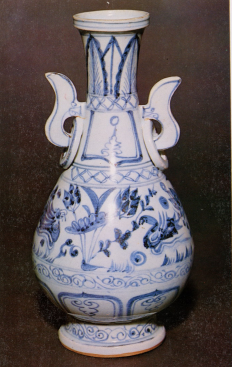


Core Characteristics
- Decoration Technique: Blue-and-White (Qinghua)
- It is an underglaze technique. Artisans paint designs on the porcelain body using cobalt pigment, apply a transparent glaze over it, and fire it at a high temperature in a single firing, resulting in the elegant contrast of white background and blue patterns.
- The shade of blue varies across eras due to different cobalt materials (e.g., Sumali blue, Pingdengqing, Huiqing, Zhejiang cobalt), ranging from intense and vivid to pale and elegant, sometimes with a haloed effect.
- Primary Motif: Mandarin Duck Design
- Symbolism: Mandarin ducks have been traditionally seen as symbols of faithful love and conjugal harmony. Therefore, such vases often carry auspicious wishes for marriage and were commonly used as wedding gifts or display pieces.
- Common Compositions:
- Mandarin Ducks Sporting in Water: A pair of mandarin ducks playing in a pond amid lotus flowers and swaying water weeds. This is the most common scene, often combined with lotus and reeds, symbolizing “success in examinations” or “marital harmony.”
- Lotus Pond with Mandarin Ducks: A classic and fixed pairing with the “sporting in water” theme, creating a richer scene.
- Combined with Other Auspicious Motifs: They may also be paired with magpies, butterflies, crabapple flowers, etc., to enhance the auspicious meaning.
- Form: Vase
- The specific shapes are diverse, commonly including:
- Yuhuchun Ping (Pear-Shaped Vase): Flared mouth, slender neck, dropping belly, graceful form.
- Mei Ping (Prunus Vase): Small mouth, short neck, full shoulders, slim base, standing elegantly.
- Tianqiu Ping (Globular Vase): Straight mouth, long neck, spherical body.
- Baoyue Ping (Moon-Flask): Also called a “flat flask,” with a small mouth, straight neck, and flat round body, resembling a full moon from the side.
- Different periods favored different vase shapes.
- The specific shapes are diverse, commonly including:
Historical Evolution and Period Characteristics
The blue-and-white mandarin duck motif was used throughout the Yuan, Ming, and Qing dynasties, each with distinct styles:
- Yuan Dynasty: Foundational period. Decoration was densely arranged, brushwork free and vigorous. The ducks were depicted powerfully and vividly. The blue was often intense with “iron-rust” spots. Frequently part of larger scenes like lotus ponds with waterfowl.
- Ming Dynasty:
- Yongle and Xuande Periods (Peak): Used imported Sumali blue, resulting in a vibrant, sapphire-blue color with halo effects and iron spots. Painting was refined, ducks lively, and composition well-spaced.
- Chenghua Period: Switched to Pingdengqing cobalt, producing a soft, pale blue. Lines were delicate, style elegant and meticulous, depicting ducks gracefully.
- Jiajing and Wanli Periods: Often used Huiqing cobalt, resulting in a purplish-blue tint. The style became more ornate and compositions densely packed.
- Qing Dynasty (Especially Kangxi, Yongzheng, Qianlong):
- Technical Peak: Used domestic Zhejiang cobalt, producing a pure, bright blue with strong tonal gradations (“divided-wash” technique mastered).
- Exquisite Painting: Motifs were extremely precise and orderly. Details like the ducks’ feathers were rendered meticulously. Compositions emphasized symmetry and auspicious meanings.
- Diverse Forms: A greater variety of vase shapes and sizes appeared.
Key Points for Collection and Appreciation
- Dating: Examine the shade of the blue, painting style, characteristics of the body and glaze, vessel shape, and foot ring treatment.
- Condition: Check the integrity of the glaze surface, clarity of the blue, and presence of flaws like hairline cracks or chips.
- Artistry: Assess the beauty of the composition, the vitality in the depiction of the ducks, and the visual appeal of the blue color.
- Rarity: Pieces from earlier dynasties, imperial kiln products, unusual forms, and those with exceptional painting are particularly valuable.
Famous Examples
- Yuan Blue-and-White Ewer with Lotus Pond and Mandarin Ducks
- Ming Yongle Blue-and-White Bowl/Dish with Lotus Pond and Mandarin Ducks (extremely famous)
- Qing Kangxi Blue-and-White Yuhuchun Vase with Mandarin Ducks Sporting in Water
- Qianlong Blue-and-White Globular Vase with Lotus Pond and Mandarin Ducks
In summary, the “Blue-and-White Porcelain Vase with Mandarin Duck Design” is a quintessential example of Chinese porcelain, perfectly combining elegant form, exquisite craftsmanship, classic motifs, and beautiful symbolism. If you have or encounter an actual piece, a comprehensive judgment should be made based on the characteristics of the various periods mentioned above. For significant pieces, the most reliable approach is to seek authentication from a professional institution or expert.