


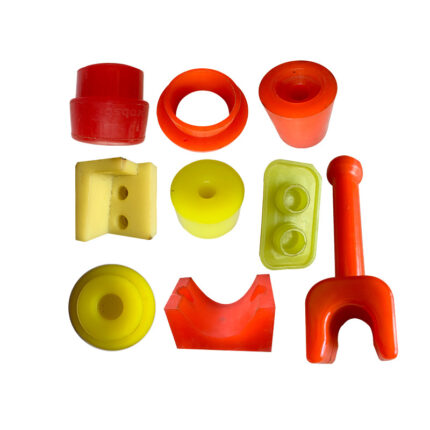
Customized Silicon Carbide (SiC) Ceramic Parts – High Precision CNC Machining Wear Resistant Components for Mechanical Seals
1.Material Overview & Core Advantages
Silicon carbide (SiC) is an advanced ceramic material composed of silicon and carbon, renowned for its exceptional performance in extreme environments.
Core Advantages at a Glance
| Advantage | Description | Customer Value |
| Ultra-High Hardness | Mohs hardness 9.5, second only to diamond | Longer product lifespan, excellent wear resistance |
| Excellent Temperature Resistance | High strength at high temperatures, high thermal conductivity, low thermal expansion coefficient | Stable operation in high-temperature environments, excellent thermal shock resistance |
| Superior Chemical Stability | Corrosion-resistant, oxidation-resistant | Suitable for harsh chemical environments such as acids and alkalis |
| Outstanding Electrical Performance | Wide bandgap semiconductor material | Enables high-voltage, high-frequency, low-loss power electronics solutions |
2.Product Series & Specifications
SiC products are mainly divided into Industrial/Optical Grade and Semiconductor Grade, with differentiated performance achieved through different sintering processes.
2.1 Product Series Overview
| Product Series | Process Type | Key Feature | Typical Applications | Operating Temperature |
| Pressureless Sintered SiC (SSiC) | Pressureless Sintering | Best overall performance, hardest and strongest | Mechanical seals, ballistic armor, precision components | ≤1800℃ |
| Reaction Bonded SiC (SiSiC) | Reaction Bonding | Cost-effective, suitable for large parts | Heat exchangers, desulfurization nozzles, large kiln furniture | ≤1380℃ |
| Recrystallized SiC (R-SiC) | Recrystallization Sintering | Highest temperature resistance, highest purity | Ultra-high temperature kiln furniture, burner nozzles | ≤1600℃ |
| Semiconductor Grade SiC | Crystal Growth | Excellent electrical properties | EV power devices, 5G RF devices | – |
2.2 Quick Comparison of the Four Materials
| If You Care About… | First Choice | Second Choice | Not Recommended |
| Highest Strength / Hardness | Pressureless Sintered (SSiC) | Reaction Bonded (SiSiC) | Recrystallized (R-SiC) |
| Highest Operating Temperature | Recrystallized (R-SiC) | Pressureless Sintered (SSiC) | Reaction Bonded (SiSiC) |
| Lowest Cost | Reaction Bonded (SiSiC) | Pressureless Sintered (SSiC) | Recrystallized (R-SiC) |
| Most Complex Shapes | Reaction Bonded (SiSiC) | Pressureless Sintered (SSiC) | Recrystallized (R-SiC) |
2.3 Detailed Specifications & Performance Indicators
Pressureless Sintered SiC (SSiC) – Best Overall Performance
| Parameter | Typical Value | What It Means for You |
| Density | 3.10 – 3.20 g/cm³ | Heavier than aluminum, lighter than steel |
| Flexural Strength | 400 – 650 MPa | 1.5-2 times stronger than ordinary steel |
| Vickers Hardness | ≥ 22 GPa | Extremely hard, second only to diamond |
| Elastic Modulus | > 400 GPa | Very high stiffness, resistant to deformation under load |
| Fracture Toughness | > 4.5 MPa·m¹/² | Moderate impact resistance |
| Thermal Conductivity | 120 – 200 W/(m·K) | Fast heat dissipation |
| Max Operating Temperature | ~1800℃ | Can be used at extremely high temperatures (inert atmosphere) |
| Customizable Size | According to drawings | Complex shapes supported |
Ideal Applications: Mechanical seal rings, ballistic armor plates, semiconductor equipment precision components, high-temperature fixtures
Reaction Bonded SiC (SiSiC) – Best Cost-Effectiveness
| Parameter | Typical Value | What It Means for You |
| Density | > 3.02 g/cm³ | Nearly fully dense, excellent airtightness |
| Flexural Strength | 250 – 300 MPa | Sufficient strength for most industrial applications |
| Apparent Porosity | < 0.1% | Impermeable, suitable for sealing applications |
| Max Operating Temperature | ~1380℃ | Note: Softens above this temperature |
| Free Silicon Content | 12 – 19% | Reason for temperature limitation |
| Customizable Size | Large components possible | Near-net shape forming, minimal machining allowance |
Ideal Applications: Heat exchangers, desulfurization nozzles, kiln beams and rollers, large complex structural parts
Recrystallized SiC (R-SiC) – Highest Temperature Resistance
| Parameter | Typical Value | What It Means for You |
| Density | > 2.6 g/cm³ | Relatively lightweight |
| Apparent Porosity | 10 – 20% | Open pore structure, permeable |
| Flexural Strength | 100 – 200 MPa | Lower strength compared to the other two |
| Max Operating Temperature | ~1600℃ | Stable for long-term use in air |
| Purity | > 99.5% | No impurities, suitable for high-purity environments |
Ideal Applications: Ultra-high temperature kiln furniture, radiant heating tubes, burner nozzles, high-temperature filters
Semiconductor Grade SiC Wafer Substrate
| Parameter Category | Specification | Typical Value |
| Diameter | Size Options | 4 inch / 6 inch / 8 inch |
| Thickness | Standard Thickness | 350 µm ± 25 µm |
| Crystal Type | Semiconductor Mainstream | 4H-SiC |
| Micropipe Density | Crystal Defect | ≤ 0.1 cm⁻² |
| Resistivity | Conductive Type | 0.015 – 0.025 Ω·cm |
| Resistivity | Semi-Insulating Type | > 10⁷ Ω·cm |
| Surface Roughness | After CMP Polishing | Ra ≤ 0.2 nm |
Ideal Applications: EV main inverters, charging piles, photovoltaic inverters, 5G base station RF devices
3.Selection Guide
3.1 Quick Selection by Application
| Your Application Area | Recommended Product | Why Choose It |
| Mechanical Seals, Sliding Bearings | Pressureless Sintered (SSiC) | High hardness, wear-resistant, corrosion-resistant |
| Ballistic Armor, Armor Plates | Pressureless Sintered (SSiC) | High hardness, good toughness, multi-hit resistance |
| High-Temperature Kiln Furniture (<1380℃) | Reaction Bonded (SiSiC) | Low cost, oxidation-resistant |
| High-Temperature Kiln Furniture (1380-1600℃) | Recrystallized (R-SiC) | Highest temperature resistance, high purity |
| Heat Exchangers, Desulfurization Nozzles | Reaction Bonded (SiSiC) | Corrosion-resistant, good thermal conductivity, large parts possible |
| Semiconductor Process Components | Pressureless Sintered (SSiC) | High purity, plasma corrosion resistance |
| EV / Photovoltaic Inverters | Semiconductor Grade Wafer | Low loss, high voltage resistance |
| Precision Optical Mirrors | Reaction Bonded (SiSiC) | Polishing to nanometer level, thermal stability |
3.2 Quick Selection by Key Requirements
| Your Priority | First Choice | Second Choice | Selection Advice |
| Temperature >1500℃ | Recrystallized (R-SiC) | Pressureless Sintered (inert atmosphere) | Use R-SiC for air; SSiC acceptable in protective atmosphere |
| Temperature 1300-1500℃ | Reaction Bonded (SiSiC) | Pressureless Sintered (SSiC) | SiSiC offers lower cost |
| Highest Strength / Hardness | Pressureless Sintered (SSiC) | – | SSiC offers the best mechanical properties |
| Lowest Cost | Reaction Bonded (SiSiC) | – | Low-cost raw materials, near-net shape saves machining costs |
| Highest Purity | Recrystallized (R-SiC) | Semiconductor Grade | R-SiC has no sintering aids, purity >99.5% |
| Large Parts, Complex Shapes | Reaction Bonded (SiSiC) | Pressureless Sintered (SSiC) | SiSiC has extremely low shrinkage, ideal for large dimensions |
| Maximum Wear Resistance | Pressureless Sintered (SSiC) | Reaction Bonded (SiSiC) | Higher hardness provides longer service life |
4.Customization & Ordering Process
We provide full-process customization services from requirements communication to batch delivery. The following table details each step, including your responsibilities, our work, associated costs, and timelines.
4.1 Customization & Ordering Process Table
| Step | What You Need to Do | What We Do | Associated Costs | Timeline |
| 1. Requirements Communication | • Provide application scenario, working environment • Provide drawings (with dimensional tolerances, geometric tolerances, surface roughness) • Specify quantity expectations • Clarify key performance indicators | • Assess technical feasibility based on customer-provided drawings • Determine if specialized molds are required • Evaluate reasonableness of tolerance requirements and cost impact • Provide preliminary technical recommendations | None | 1-2 days (subject to actual conditions) |
| 2. Solution & Quotation | • Confirm technical solution • Confirm material and process route • Confirm final drawing version • Both parties confirm drawing number and version in writing | • Specify: material/process, mold fee, sample fee, unit price for batch production, lead time • Calculate processing costs based on tolerances in customer drawings • Provide formal quotation • Lock customer-provided final drawings as processing basis | None | 2-3 days (subject to actual conditions) |
| 3. Mold Fabrication | • Confirm mold fee • Sign mold fabrication agreement • Confirm drawings are locked with no further changes | • Design and fabricate specialized molds • Provide mold drawings for confirmation • Strictly design molds according to tolerances in customer’s final drawings | Mold Fee (one-time charge) | 2-4 weeks (depends on mold complexity; subject to actual conditions) |
| 4. Sample Trial Production | • Confirm sample order • Pay sample fee • Final drawings provided by customer (with tolerances) shall prevail | • Process strictly according to dimensional tolerances, geometric tolerances, and surface roughness in customer drawings • Select processing technology based on drawing requirements • Issue full dimensional inspection report (comparing each item against customer drawing tolerances) • Provide performance test data • Ensure all sample indicators meet customer drawing requirements | Sample Fee | 4-8 weeks (depends on product complexity and production schedule; subject to actual conditions) |
| 5. Sample Confirmation | • Inspect sample against customer-provided final drawings • Verify dimensions, geometric tolerances, surface roughness • Provide feedback • If compliant with drawings, sign confirmation | • Assist customer with sample inspection • Provide inspection data support • Analyze and optimize if adjustments needed • If non-conformance due to our processing issues, we bear the cost of re-trial | None (if re-trial required, additional quotation provided) | Based on feedback (subject to mutual confirmation) |
| 6. Batch Production | • Confirm batch order • Sign batch purchase contract • Customer-provided final drawings shall prevail | • Organize batch production according to quality system • Strictly implement process control per customer drawing requirements • Provide production progress tracking • Provide dimensional inspection report for each batch | Batch Payment | 6-8 weeks (depends on order quantity and production schedule; subject to actual conditions) |
| 7. Delivery & After-Sales | • Inspect products against customer-provided final drawings • Confirm receipt | • Ship according to agreed lead time • Provide usage recommendations • Provide after-sales technical support | None |
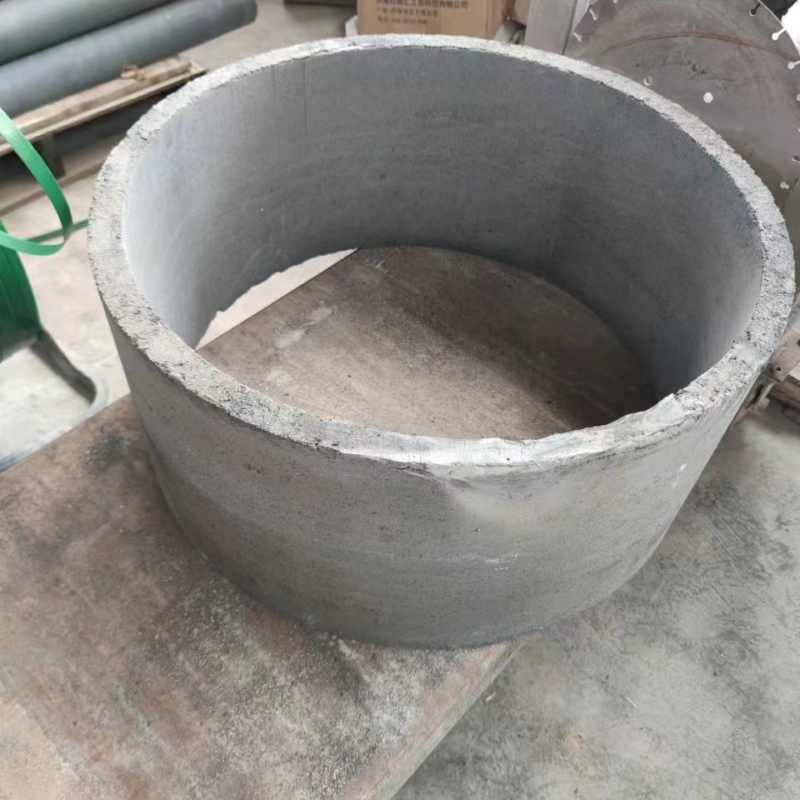
5.Appearance




6.Price
The EXWprice 0.01USD/PC displays online , actually we need to confirm the actual price based on your request between us with your drawing and the application , thank you.
รีวิว
ยังไม่มีบทวิจารณ์