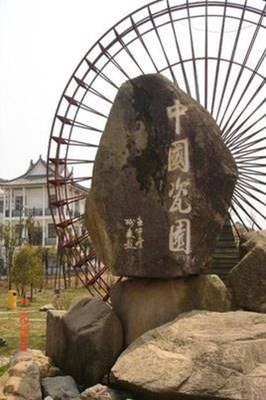


Jingdezhen is a prefecture-level city, formerly a small town in Jiangxi Province, China, with a permanent population of 1,587,477 in 2010. Known as the “Porcelain Capital” for producing high-quality porcelain for 1,700 years, the city boasts a history spanning over 2,000 years. Jingdezhen is one of China’s famous historical and cultural cities and was recognized as an outstanding civilized and healthy city in Jiangxi Province by the end of 2007.
The ceramics of Jingdezhen, Jiangxi, are a brilliant pearl in the treasure trove of Chinese national culture and art. Its long and splendid history of nearly 2,000 years has left behind exquisite craftsmanship for future generations and nurtured countless artistic masters throughout the ages. In the course of its long-term development, the artisans of Jingdezhen have worked diligently, striving for innovation and creating numerous outstanding works, giving Jingdezhen porcelain its own unique style.
As early as the Eastern Han Dynasty, ancient people built kilns in Changnan (Jingdezhen) to fire ceramics. By the Tang Dynasty, due to the excellent quality of Changnan’s clay, the ancestors combined the strengths of southern celadon and northern white porcelain to create a type of bluish-white porcelain. This bluish-white porcelain, with its crystalline and lustrous texture, earned the reputation of “artificial jade” and was extensively exported to Europe.
During the Yuan Dynasty, the porcelain industry declined compared to the Song Dynasty. However, this period also saw new developments, such as the rise of blue-and-white porcelain and underglaze red, the widespread popularity of polychrome porcelain, and the emergence of white porcelain as the mainstream, paving the way for the remarkable achievements of the Ming and Qing dynasties.
The development of Chinese ceramic art entered a new phase during the Ming Dynasty. While celadon dominated before the Ming era, white porcelain became the primary focus afterward. Jingdezhen emerged as the leading kiln site, maintaining its unparalleled scale and enduring prosperity for five to six centuries through the Ming and Qing dynasties. The grandeur of the time was described as “white smoke veiling the sky by day, red flames lighting the heavens by night.”
After the Qianlong era of the Qing Dynasty, Jingdezhen’s porcelain production began to decline from its peak, with shrinking output, quality, variety, and design. Following the Opium Wars, the industry suffered severe devastation, and the imperial kilns, which had operated for over 500 years, came to an end.
Jingdezhen has a long-standing tradition of porcelain craftsmanship. Despite extreme hardships, its skilled artisans persisted in handcrafting porcelain and resisted competition from foreign machine-made ceramics, preserving China’s esteemed reputation in the global porcelain market. Modern Jingdezhen porcelain-making techniques have inherited traditional methods while absorbing and refining the finest aspects of domestic and international craftsmanship, propelling ceramic artistry to new heights.