1. Historical Context: The Yongle Kiln
- Under Emperor Yongle (Zhu Di), the technical craftsmanship of the Jingdezhen Imperial Kiln reached its zenith, especially in the production of white-glazed porcelain.
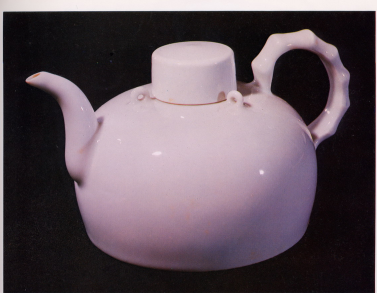
- Sweet White Glaze is representative of Yongle-era white porcelain. The glaze is lustrous, smooth as fat, and warm like jade. Its subtle yellowish or pale bluish undertone gives it a “sweet” impression, hence the name “Sweet White.”
2. Characteristics of Sweet White Glaze
- Pure Glaze Quality: Made from refined porcelain clay (kaolin) and a transparent glaze, the glaze layer is even and almost free of impurities.
- Subtle Glaze Color: Unlike the cool white of Yuan Dynasty white porcelain, Yongle Sweet White has a soft tone, appearing as a light ivory or milky white under light.
- Thin Body: Some pieces have an extremely thin body (reaching a “translucent” or “egg-shell” quality), allowing light to pass through and creating a hazy effect where the body and glaze blend.
- Minimal Decoration: Sweet White porcelain often appears plain and undecorated, highlighting the beauty of the glaze. Some pieces feature subtle incised (carved) or molded patterns, such as dragons, phoenixes, or scrolling lotus, visible only under sidelight due to the glaze coverage.
3. Form of the “Teapot with Handle” (Zhihu)
- Shape: Yongle teapots often follow forms like the “yuhuchun” (玉壺春) style, pear-shaped, or “monk’s cap” style, with smooth and elegant lines. The handle curves naturally, and the spout, lid, and body are well-proportioned.
- Craftsmanship: The handle is typically curved and connected to the neck; the spout is slender and arched, echoing the body; the lid knob is often shaped like a jewel or cylinder.
- Size: Generally 15–25 cm in height, suitable for pouring wine or water by hand.
4. Market and Authentication Points
- Rarity of Authentic Pieces: Genuine Yongle Sweet White teapots with handles are extremely rare, primarily housed in museums such as the Palace Museum in Beijing, the National Palace Museum in Taipei, and world-class institutions like the British Museum.
- Numerous Imitations: Imitations were produced during the Ming and Qing Dynasties, as well as in modern times. Authentication requires careful examination of the clay body, glaze color, and craftsmanship details.
- Key Features:
- Body Material: Fine, white, and translucent when held against light (especially for “translucent” wares).
- Glaze Surface: Smooth and moist like jade, with fine “orange peel” texture (often invisible to the naked eye).
- Foot Rim: Neatly trimmed, with slight “fire-red” oxidation marks on the unglazed areas.
- Marks: Most Yongle Sweet White pieces are unmarked; a few bear hidden underglaze incised seals reading “Yongle nian zhi” (Made in the Yongle Reign) in seal script.
5. Cultural and Collectible Value
- Historical Significance: Sweet White Glaze was an innovation of the Yongle Imperial Kiln and set an aesthetic standard for later white porcelain (including Dehua white porcelain).
- Religious Connections: White porcelain in the Ming Dynasty was associated with imperial rituals and Buddhist ceremonies, possibly used in worship or offerings.
- International Influence: Yongle white porcelain influenced the Islamic world (e.g., the Ottoman court in Turkey) through trade and inspired the development of European porcelain.